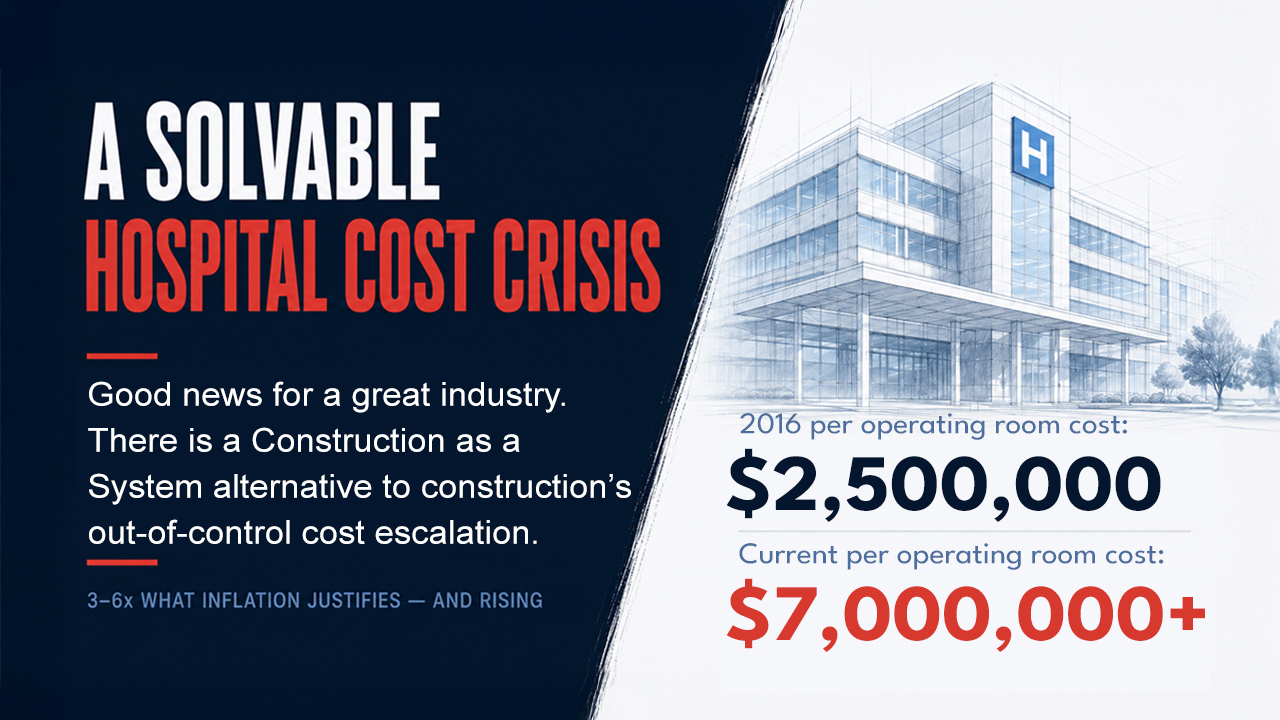
The alarming and unsustainable hospital cost phenomenon calls for something radically different.
Its time to replace our broken state with a high efficiency,
automated, end-to-end system to plan, design, and produce buildings.
Building CATALYST introduces a Construction as a System (CaaS) alternative to our
conventional fragmented state. CaaS applies to construction the same management philosophy and systems theories that helped create Toyota Production System.
Watch in Action
From Silos to a System
featured research
The Data Knows the Problem And the Causes
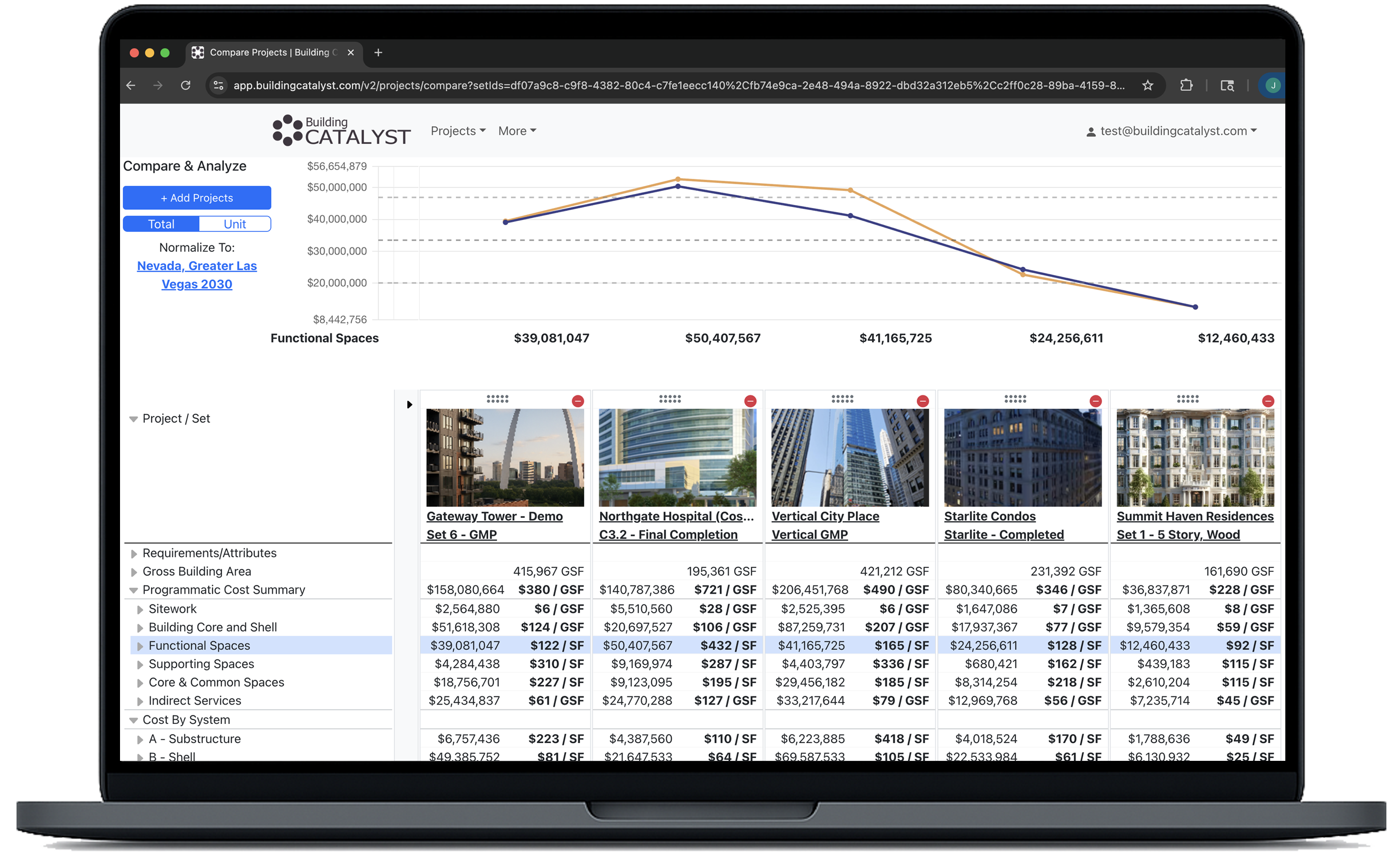
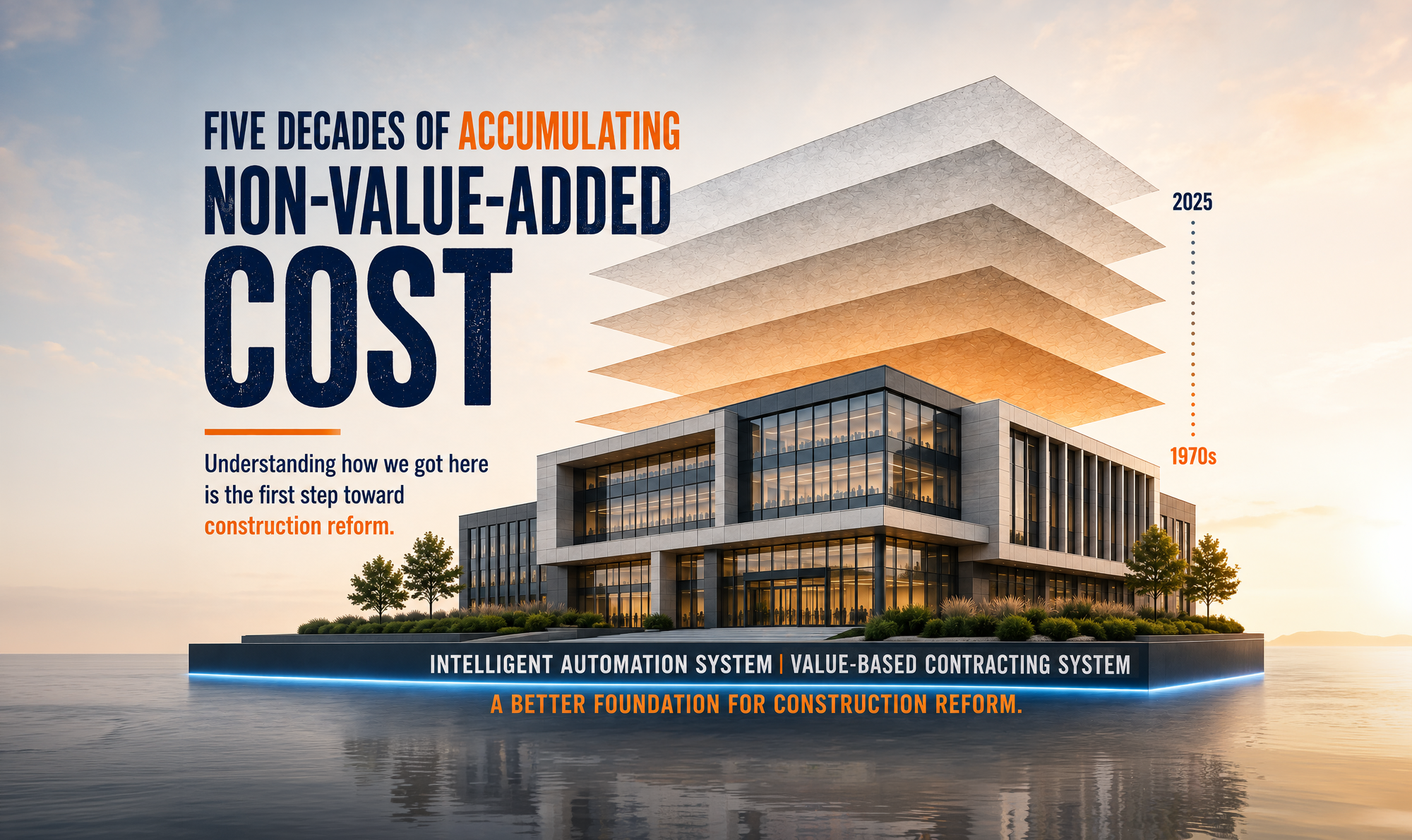
National macroeconomic data research shows a strong correlation between excessive cost escalation and growth of negotiated first tier (CM, IPD, etc.) contracting. A recent, deeper, microeconomic data research of 35 hospitals shows an even stronger correlation between the surging hospital costs and negotiated second tier (trade and prefabrication) contracting. These articles present a case for misaligned incentives and the lack of impartial market intelligence (aka objective knowledge) as the central causes.
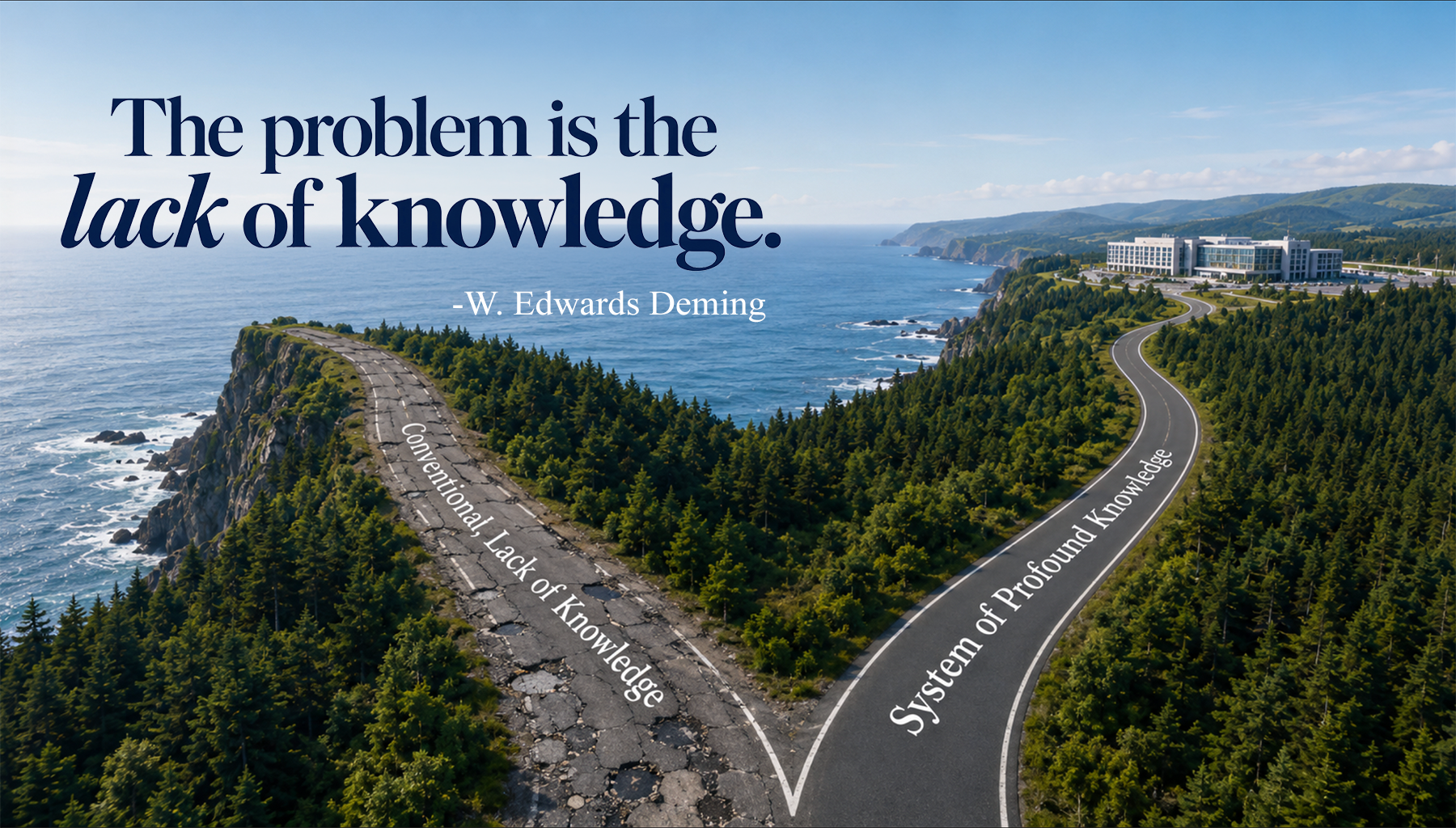
World renown quality and process improvement pioneer, W. Edwards Deming, developed the System of Profound Knowledge. Construction as a System enables the full implementation of Deming’s system to drive out waste in planning, design, and construction operations. It provides the means through an intelligent automation and the motivation though a value-based contracting and win-win compensation system.
Intelligent Automation System (IAS)
Replaces the current fragmented processes, data, and technologies
with a highly integrated and automated objective knowledge system.
Value-based Contracting System (VCS)
Eliminates the financial motivation to increase waste time and cost
by replacing the prevailing cost-plus and billable-hour framework
with one that is value-based.
the VISION AND ultimate end game
Construction as a System – The FIVE STAGE
Stages 1 and 2 focus on program efficiency and construction (hard) cost effectiveness by removing the top layers of waste. These stages also serve to shift focus toward measurable value and process improvement and excellence in execution. Stages 3, 4, and 5 will naturally development to toward continuous improvement to eliminate deeper layers of waste to reduce construction cost, total project costs, and finally total cost of ownership.
1
Planning and Budgeting
Apply impartial market data to rapidly and reliably plan, program, budget and optimize project scope and cost.
↔
2
Value-Based Contracting
Align facility management, consulting, design, and construction compensation to reward value improvement and increase return-on-effort.
From Stage 2, proceed to Stage 3 or Stage 4
3
Design and Construction
Integrate, automate, and optimize design and construction support efforts via structured data standards and processes across all organizations.
4
Total Project Development
Incorporate all soft cost to the integrated automated system to optimize the total project (total first cost) development.
→
5
Total Cost of Ownership
Incorporate all facility life cycle aspects to optimize the total cost of ownership (TCO) expressed as Net Present Value.
Lead the change
Construction Reform needs leaders
Construction as a System solves our severe stagnation and excessive cost problem one project at a time.Are you a leader or influencer? If so, you have an opportunity to lead and influence.
Start Here
Owner
Demand a Higher-Performance, More Cost-Effective Building and Process
Experience transformed planning, design, construction, and occupancy as a high-performance system.
Produce Higher-Value Buildings with Far Less Effort
Be among the first systems-based builders to deliver more cost-effective buildings at a higher return while helping lead a construction reform movement.
We are pleased to schedule a web conference to learn more about your needs and explore a pilot initiative. You can also select and complete the “Free Project Analysis” form. In just a few days you’ll experience the profound knowledge firsthand.
Complete the below form. We will reach out to you soon.
Thank you. Our team will contact you to select a project, learn about your goals, and outline the next steps for your complimentary analysis.