

As McKinsey highlights, the construction industry remains in what amounts to an 80-year time warp¹, driven by fragmentation and misaligned incentives. Cost-based and billable-hour compensation dominate, leaving consultants, designers, and builders with little financial motivation to address the root causes of fragmentation.
For those who recognize this reality, the way is now paved to move from hours- and cost-based structures to value-based compensation across the board. As described in The Power of Knowledge to Reinvent Construction, the root problem—lack of objective knowledge—can now be addressed.
Acquiring objective knowledge about construction requires a proven scientific approach and applied data research.
The implications are profound. Lean Construction 2.0 opens the door to measurable process and value improvements, and the systemic removal of waste—starting in the planning and early design stages.
We cannot improve what we cannot measure. Accurate, impartial outcome predictions provide the objective knowledge needed to evaluate process and value improvement strategies effectively.
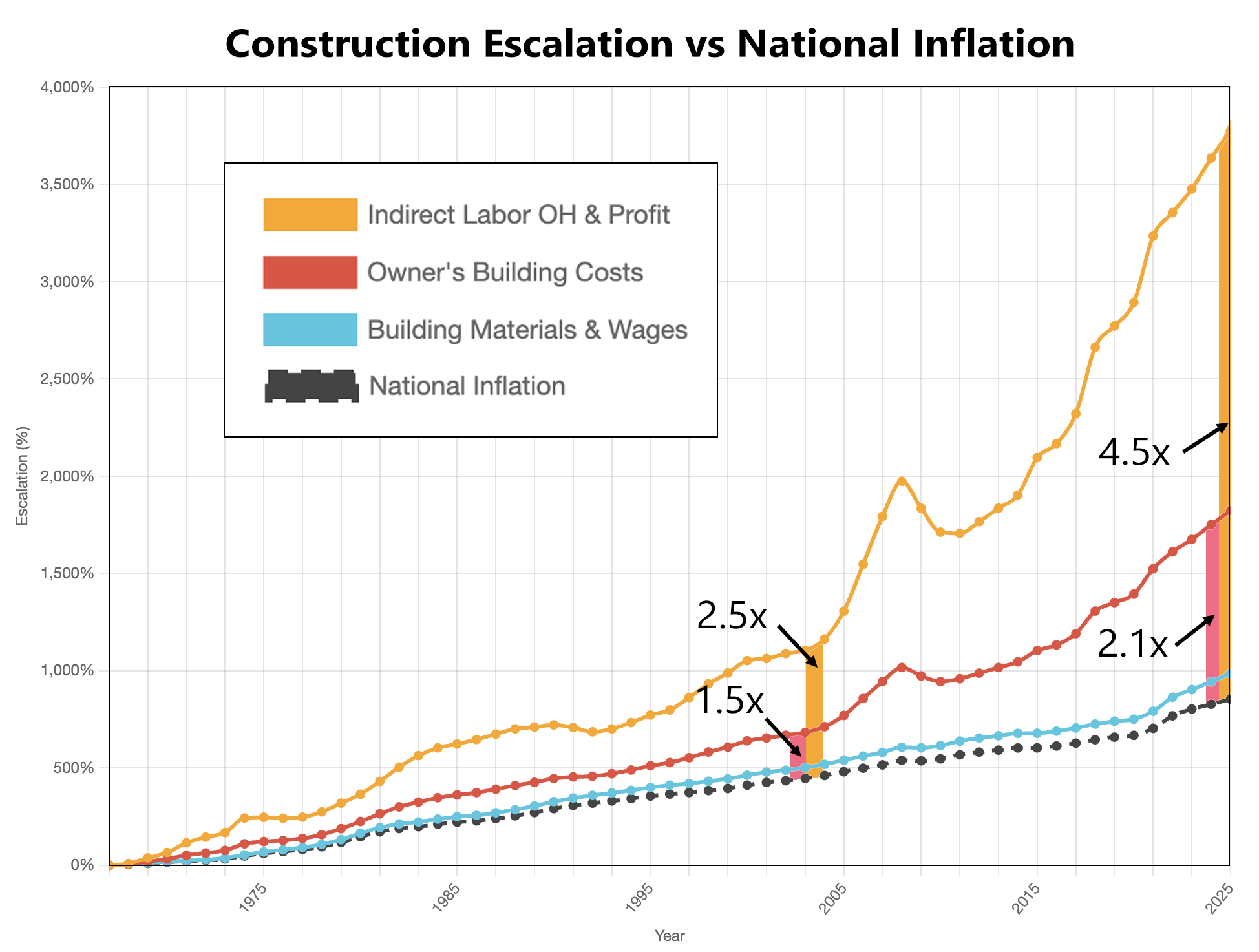
Recent macroeconomic data analysis reveals that buildings now cost owners 2.1 times their inflation-adjusted value—largely because indirect work and overhead have surged to 4.5 times their historical levels (Figure 1). This escalation correlates strongly with the rise of negotiated, cost-plus contracting.
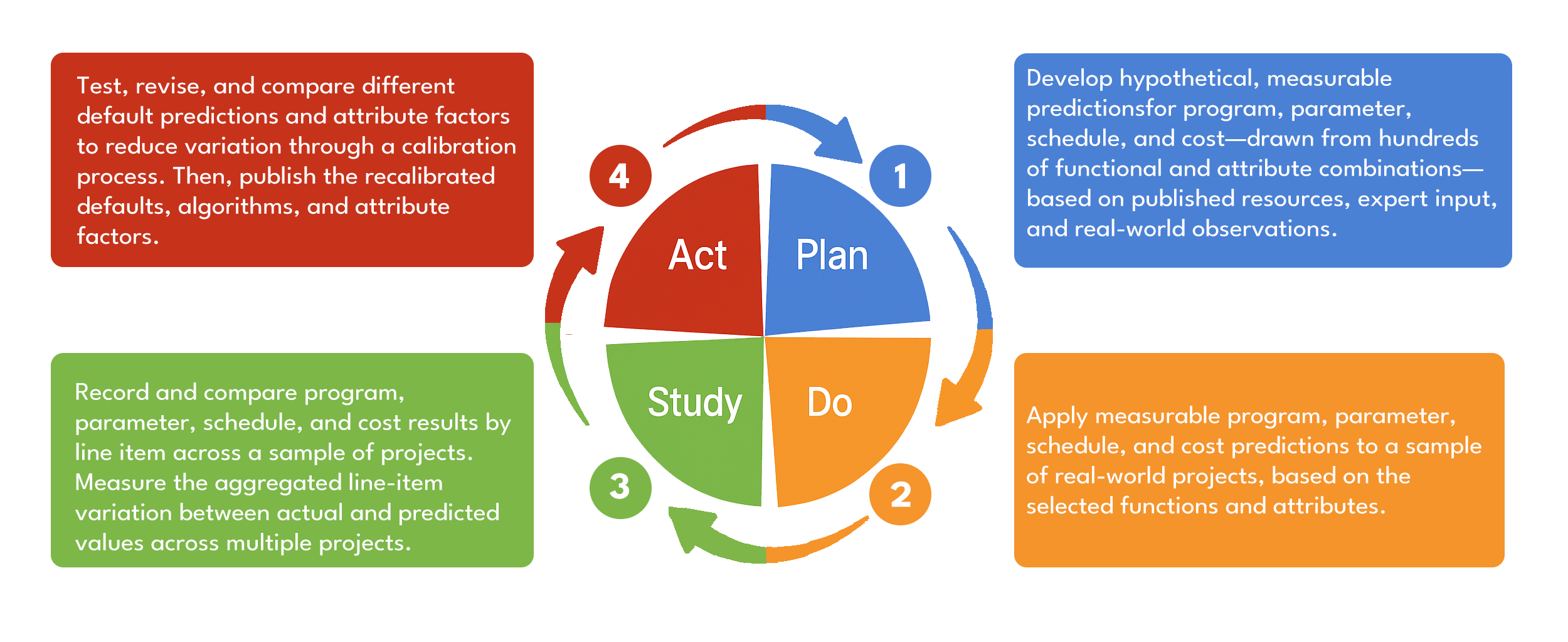
To translate these macroeconomic insights into actionable solutions, we must apply microeconomic data research using the scientific method (Figure 2). This approach—Plan, Do, Study, Act—provides the impartial value assessment that has long been missing from construction.
We must, and now can, systematize the entire planning, design, and construction support process as one integrated system. Systematization is essential to applying the scientific method to the acquisition and use of objective knowledge in the complex building process (Figure 3).
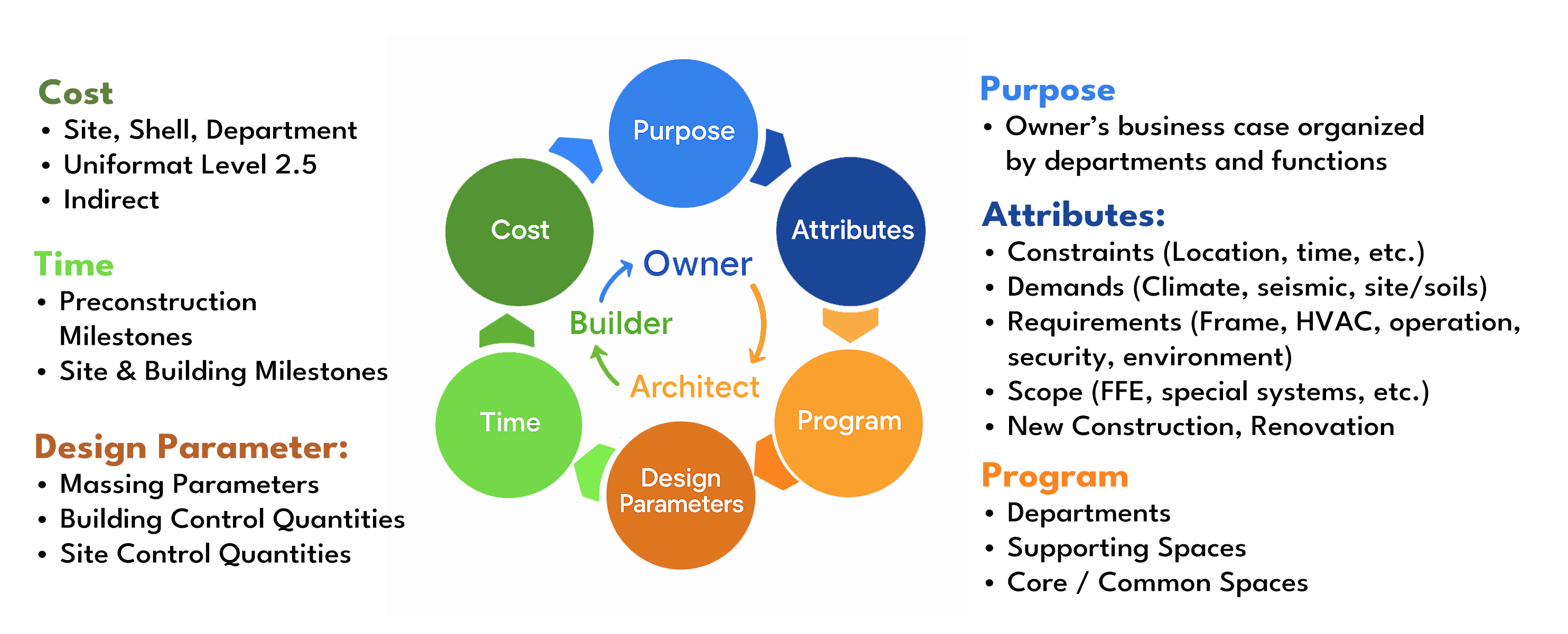
Building CATALYST has been applied to over 700 projects across 41 states by more than 30 contributors. In 145 projects, it conducted detailed cause-and-effect analyses, capturing 150–200 data entities across the critical components shown in Figure 3: Purpose, Attributes, Program, Parameters, Schedule, and Cost. These analyses validate macroeconomic findings and confirm that the Deming system of profound knowledge applies to construction as much as it does to other industries.
The initial focus has been on achieving cost certainty, which directly benefits risk management and capital acquisition. However, the greater opportunity lies in waste elimination and value optimization. Stabilization must precede optimization.
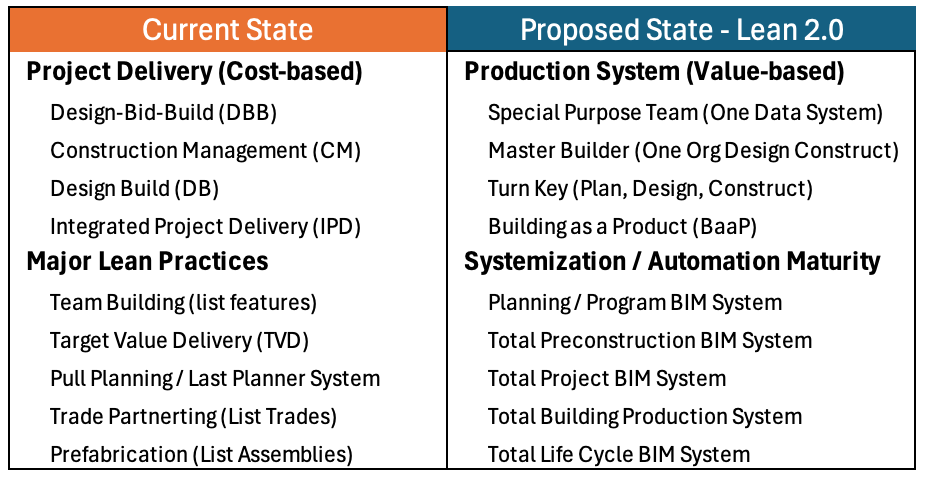
The 145 analyzed projects—primarily from ENR Top 100 builders—used a mix of Construction Management (CM) and Integrated Project Delivery (IPD). Many IPD projects and some CM projects incorporated lean practices, such as Target Value Delivery (TVD), Trade Partnering, Pull Planning/Last Planner System, and prefabrication. While these methods are intended to address fragmentation and misaligned incentives through shared savings, costs continue to rise.
Why? Are these practices as effective as intended? If not, how can we improve them?
To answer these questions, we must expand microeconomic data research. A retrospective approach involves analyzing recent or completed projects using Building CATALYST. By incorporating causal attributes of current project delivery methods and lean practices (Figure 4, Current State), we can measure their impact on outcomes. For example, what effect does trade partnering for HVAC have on first costs?
This analysis builds confidence and informs planning and design decisions. However, it does not address misaligned incentives—where owners’ representatives, designers, and builders are motivated to maximize budgets and billable hours.
Addressing misaligned incentives requires capturing past costs and billable hours for all services - consultants as well as the design and construction team. This past project data will establish the baseline valuation from which to measure improvement against. Then, in the first wave of new projects the measurement of time (billable hours) and cost will be incorporated at every level. By incorporating the most basic Planning/Program Management Systemization/Automation advancement - everyone will see how the top layers of waste and uncertainty are identified and removed. This is where Lean 2.0 proves itself and the journey toward high production and process improvement can take off.
The technology and data capabilities now exist to support both retrospective and forward-looking research. These efforts are essential to ushering in a Lean Construction 2.0 era—driving measurable value, shifting industry thinking toward systems-based, value-driven approaches, and moving away from time- and cost-based contracts.
A small group of visionary owners, developers, representatives, and researchers can launch a collaborative microeconomic data research initiative to help lead this transformation. To achieve industry-wide adoption and impact, however, the lack of standardized data structures must be addressed—a topic we’ll explore in the next article.
To learn more, visit www.buildingcatalyst.com