

Nearly nine years have passed since the McKinsey Global Institute released its landmark report, Reinventing Construction: A Route to Higher Productivity. In that report, McKinsey described the construction industry as operating inside a 1945 era time warp and outlined a set of remedies intended to reverse decades of declining productivity and excessive costs.
Even in the midst of an AI boom that promises to reshape every corner of the industry, McKinsey’s diagnosis of construction’s underlying problems, and its proposed remedies, remains essential. Their most significant recommendations centered on three core actions:
Other recommendations in the report focused on public policy, procurement practice, supply chain integration, on site efficiency, and workforce reskilling. While important, these sit either downstream of the contractual framework or outside the direct control of owners and project teams.
This article presents findings from the State of Construction Survey, which asked a group of industry professionals to assess the progress and perceived value of McKinsey’s three core remedies. These findings are considered in the context of national cost data before and after McKinsey’s publication. The conclusion is stark: the productivity crisis described in 2017 has not improved. It has intensified.
Yet the survey also reveals a measure of optimism. When presented with data and questions relating to McKinsey’s remedies, respondents provided sound confirmation that the crisis is real, that its underlying causes can be understood, and that the solutions McKinsey envisioned remain both relevant and achievable.
Construction Cost Crisis
National macroeconomic data shows that owners today are paying roughly twice the inflation adjusted value for new buildings compared to the historical baseline. Figure 1 applies the long term escalation factors presented in earlier articles in this series, which analyze national construction cost trends using publicly available data1.
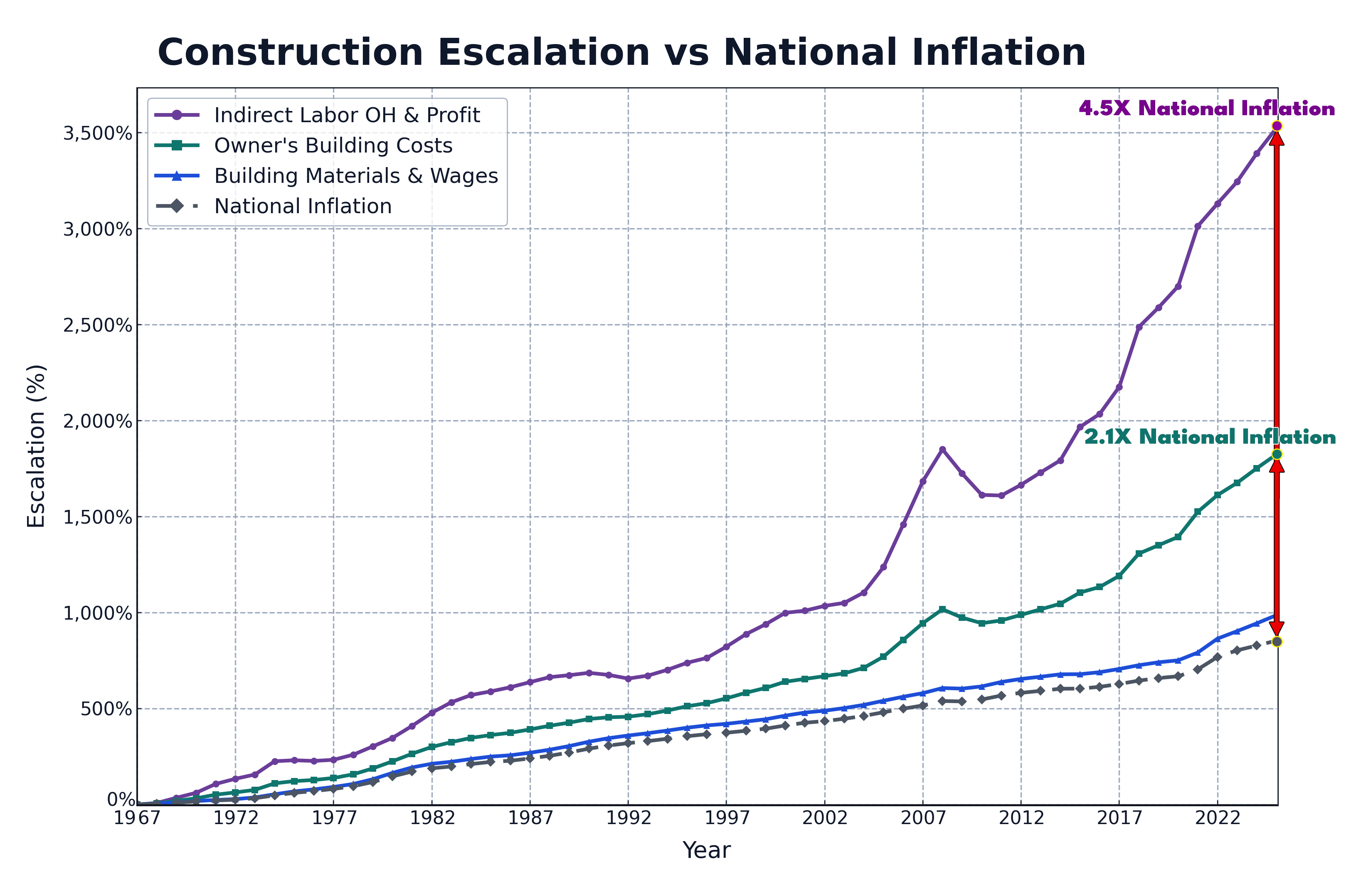
The comparison makes clear that while direct costs have risen only modestly, total costs have doubled in real terms.
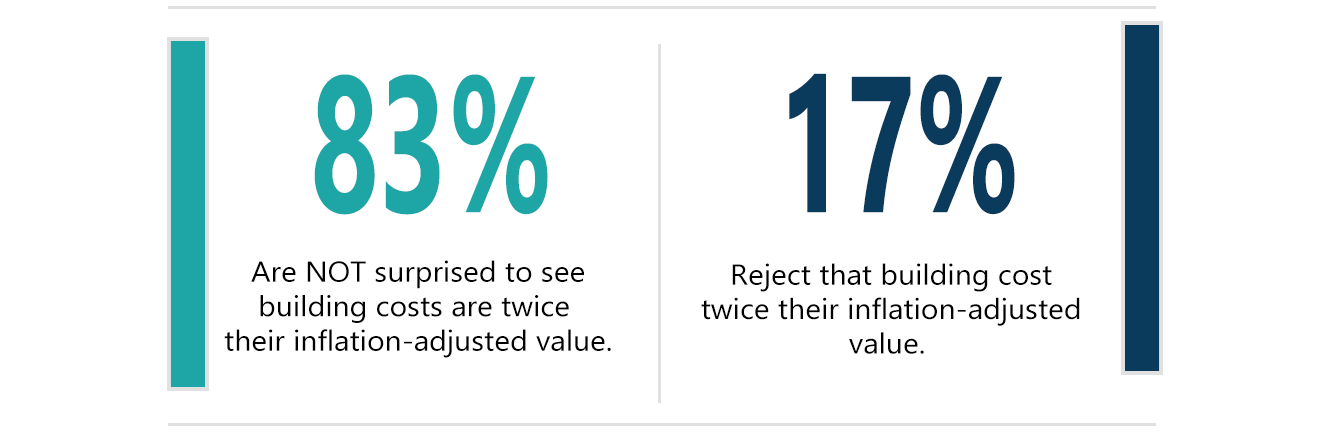
Most respondents were not surprised by the national data.
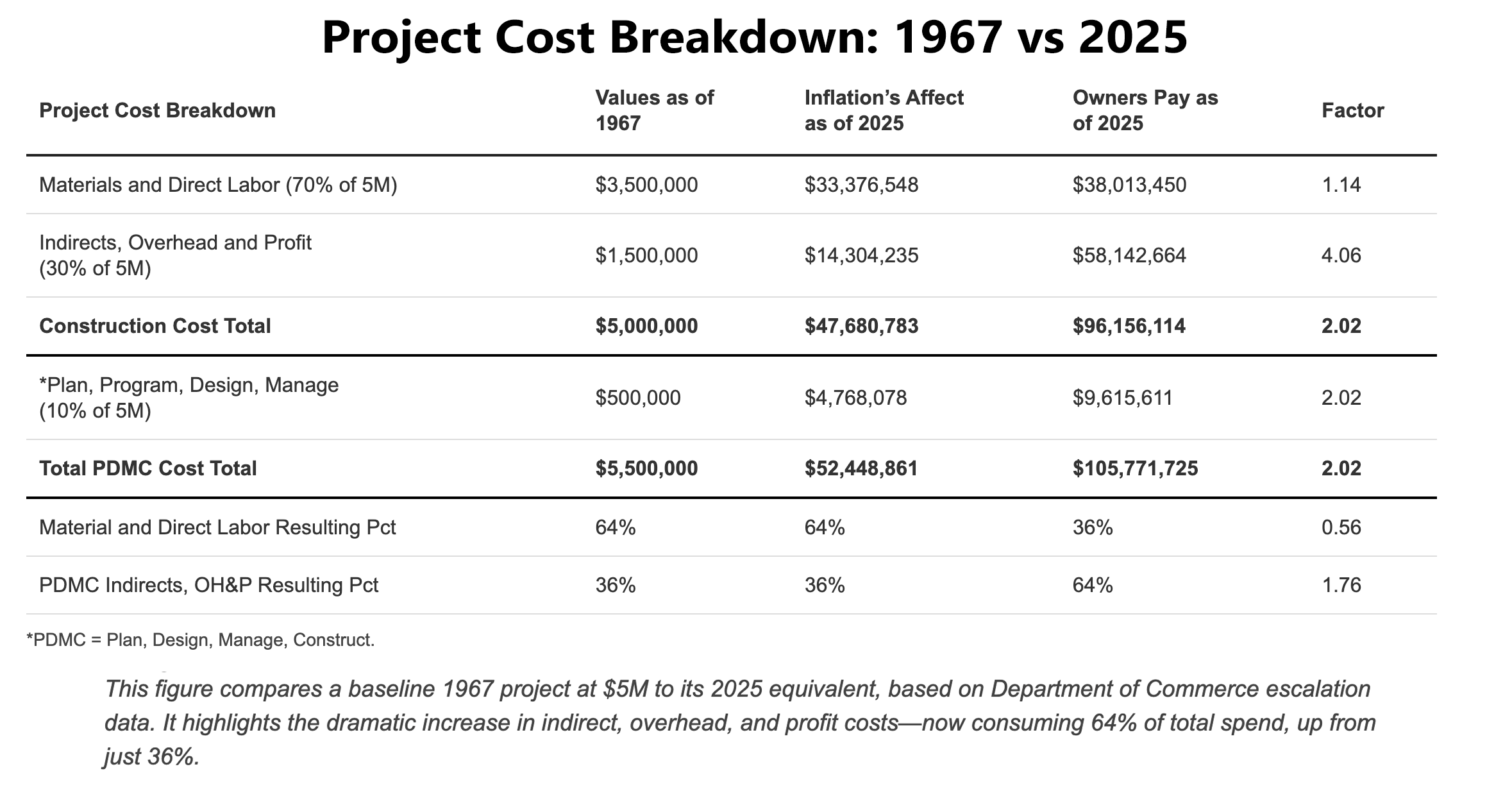
However, deeper analysis reveals a more important insight. Building materials and construction wage rates have risen only about 14 % above general inflation over the same period. This means that if today’s trades worked at the same productivity rate as their fathers and grandfathers, the combined cost of labor and materials would be only modestly higher than the inflation adjusted baseline.
Yet total building costs have doubled. This implies that the real escalation is not in direct work. It is in the indirect, support, overhead, waste and associated additional profit layers. In the below figure a simple data simulation of different proportions of direct and indirect cost shows that indirect costs have grown to at least four times their inflation adjusted value (for an explanation, see this article: Construction’s Economic Crisis – an Analytical Overview ).
When respondents were asked about this conclusion, half were not surprised, while one third questioned the finding. Despite the significance of this discovery, the data has generated almost no alarm among owners or project teams. This indifference resembles the public’s lack of reaction to the $37 trillion dollar national debt. Both trends are plainly unsustainable and deserve to be treated as crises before its too late.
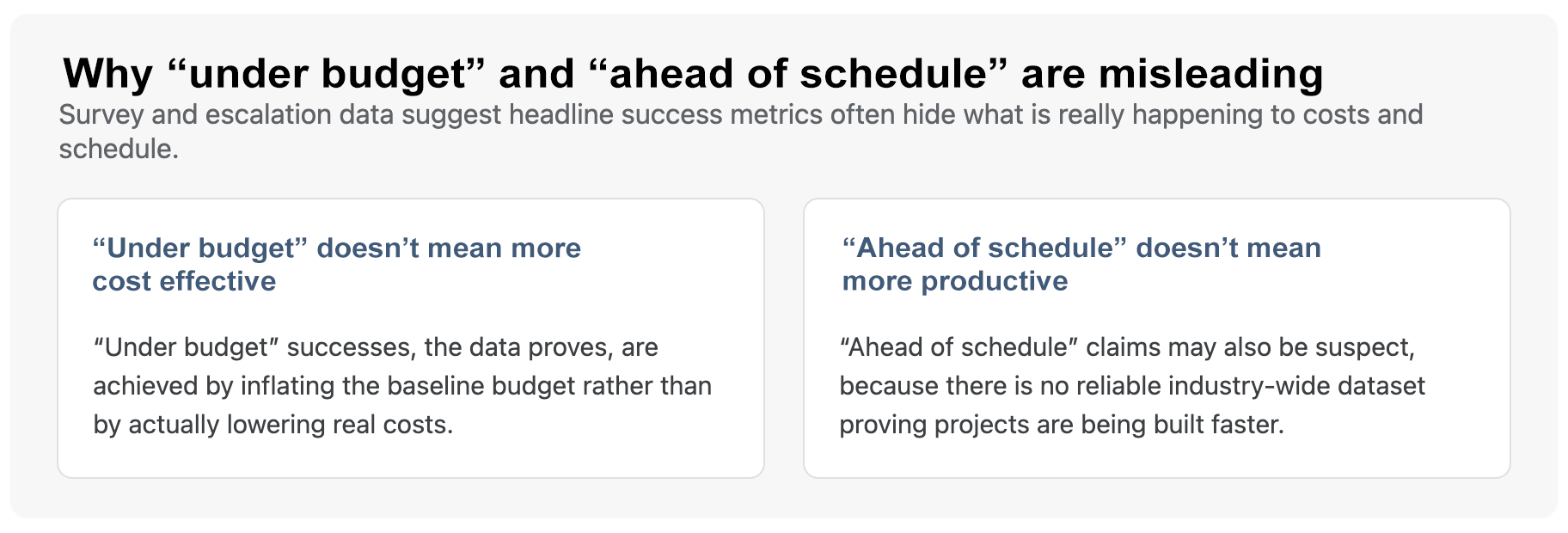
The sense of urgency that once drove McKinsey to sound the alarm has largely faded. Few in the industry are willing to confront the reality of runaway construction cost and the explosive growth of overhead and other indirect work. Within the lean construction community, the focus has drifted away from measurable cost improvement toward softer indicators such as “under budget” and “ahead of schedule.” As Figure 3 illustrates, these metrics often mask deeper inefficiencies.
When the few AEC professionals and facility owners who do see the inflation-adjusted cost data are pressed for explanations, nearly all point to the usual suspects: higher quality expectations, increased complexity, technology advances, ever-growing regulations, and (more recently) COVID disruptions. The flaw in that reasoning is simple: general inflation already embeds all of those factors. Modern automobiles, for example, have seen great leaps in quality, safety, technology, and regulatory burden – perhaps even more so than buildings, yet their real (inflation-adjusted) prices remain in line with the general inflation rate. Buildings, by contrast, now cost twice as much in real terms – a gap that cannot be explained away by these usual suspects.
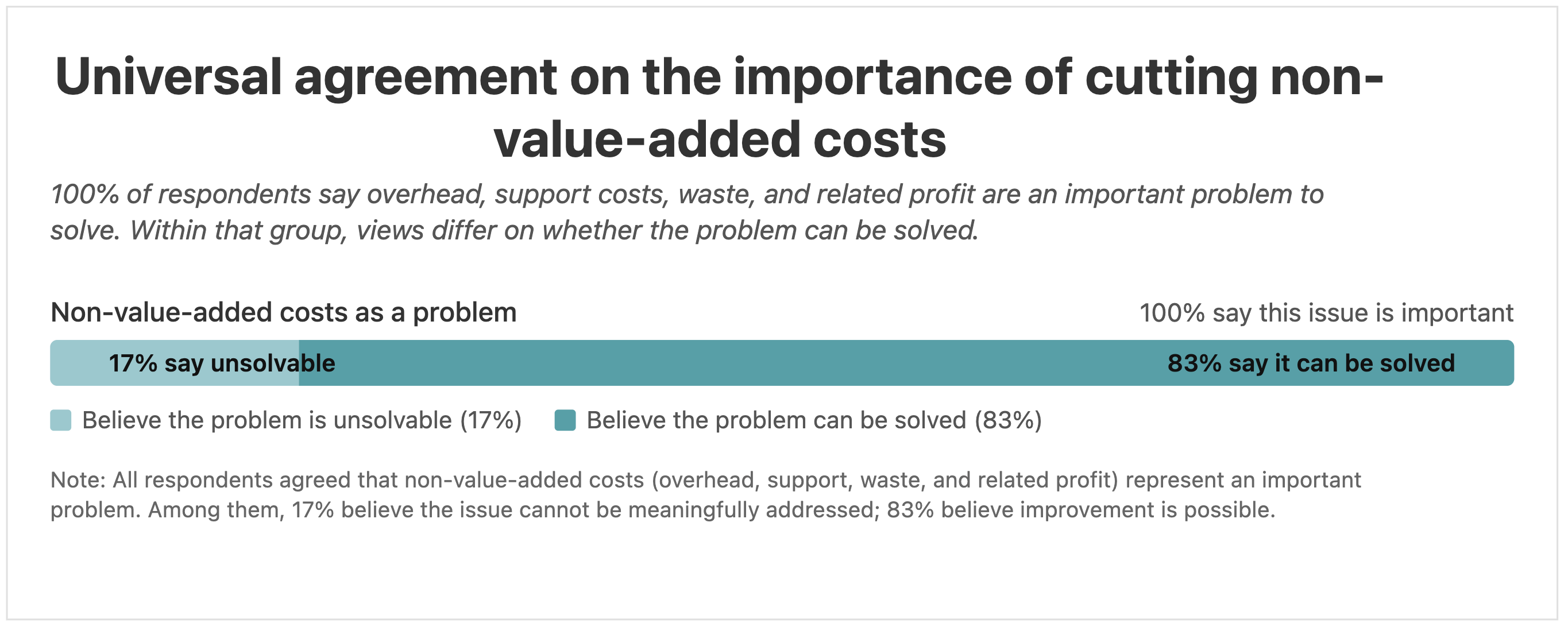
This widening gap between direct cost and total cost is the defining challenge of our time. Figure 4 shows that all respondents agree that non value added costs are an important problem, although views differ on whether these costs can be meaningfully addressed.
With these findings in mind, it is appropriate to take a closer look at McKinsey’s three recommended remedies.
Industrialized Construction (rethinking design and engineering)
Across the industry, advocates of prefabrication, modular building, and industrialized construction have promoted the idea that these approaches will improve productivity and reduce cost. Although interest in these methods predates McKinsey’s publication, implementation has grown significantly since 2017.
Survey responses reveal strong belief in the potential of industrialized construction. Every respondent who expressed an opinion believed that these methods are either delivering a net benefit today or will soon do so when time savings are factored in.
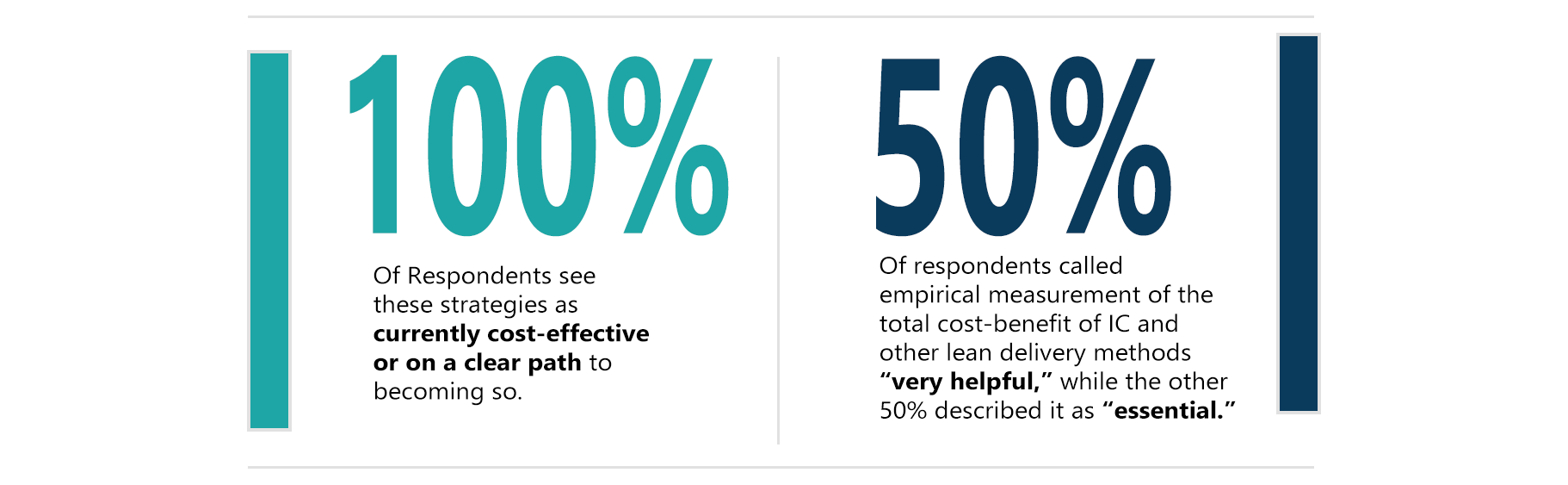
However, the industry still lacks standardized data collection and rigorous applied research. Without these, it is not yet possible to determine whether industrialized construction is truly reducing real, inflation adjusted cost at scale. Belief is strong, but measurement is weak.
Advanced Automation
An Artificial Intelligence boom now dominates conversations about automation, including those inspired by McKinsey’s construction research. Yet it is important to recognize that McKinsey’s discussions of automation largely focused on solutions that support work in the field.
The data, however, tell a different story. The overwhelming majority of waste and productivity loss today resides not in field work but in indirect activities. These include planning, design coordination, procurement, budgeting, scheduling, and the wide range of support operations that surround every project. Automation in the field is valuable, but it addresses only a small part of the problem. The far greater opportunity and the more urgent priority is to bring automation to the early stages of planning and to the support operations that shape every decision downstream.
This is the area where construction lags far behind. Automation of indirect work is still in its earliest stages, and the industry continues to lack the data standards, data structures, and systems infrastructure that automation and Artificial Intelligence depend on. Without a unified and credible foundation, Artificial Intelligence cannot deliver meaningful gains because it has nothing reliable to build on.
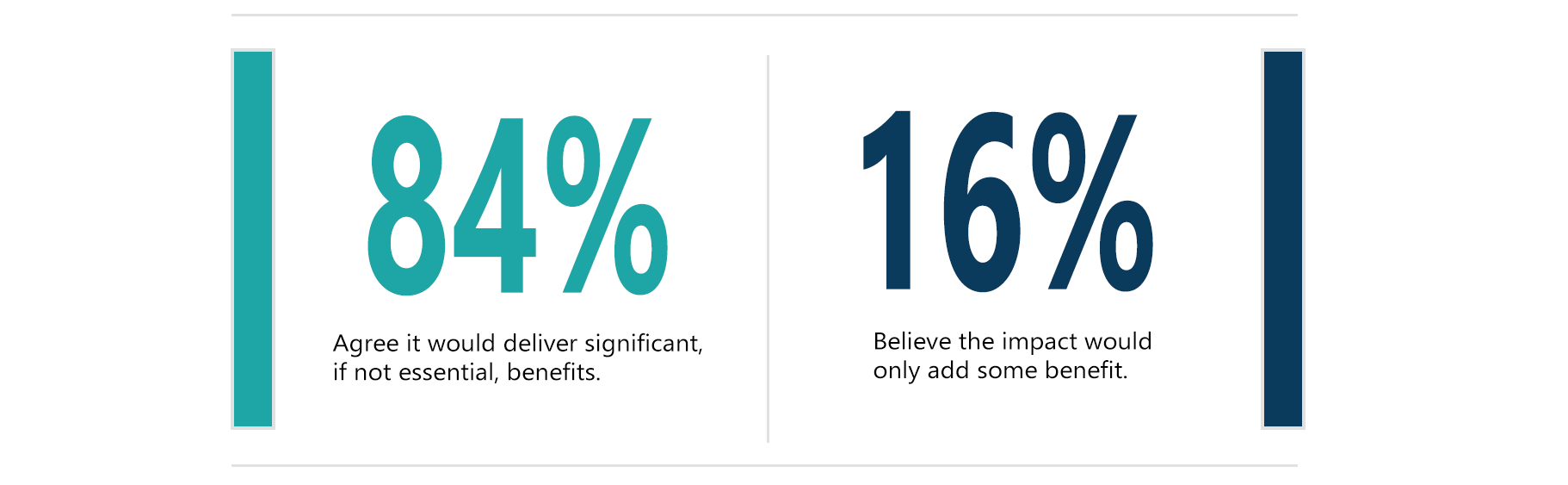
With this clearer understanding that indirect work is the primary cause of waste, survey respondents were asked to consider the potential impact of a solution that predates Artificial Intelligence. This includes data driven and computer assisted modeling and analysis during the earliest stages of planning and design such as feasibility, space programming, design decision making, budgeting, and scheduling.
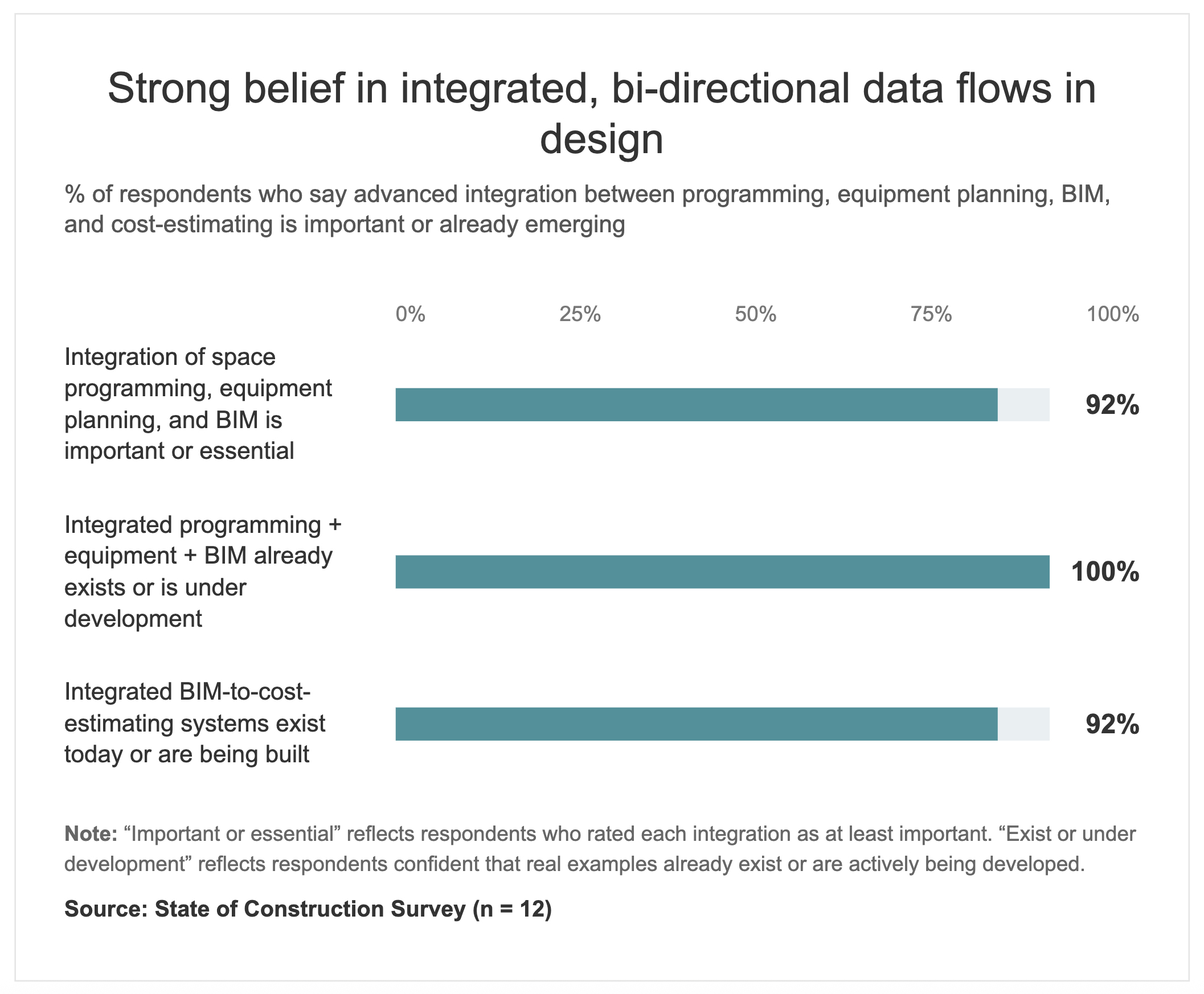
Shifting to the more detailed and complex programming and design phases, respondents were asked about the current state and importance of bi-directional, computer-assisted data exchange. The responses were surprising considering we have no known examples in the U.S.
Despite widespread belief that true integration and automation—such as seamless BIM-to-estimating workflows—are steadily advancing, the reality is far different: every phase of preconstruction remains stubbornly siloed and one-off. Figure 6 illustrates a typical 13-step preconstruction sequence and reveals the persistent fragmentation.
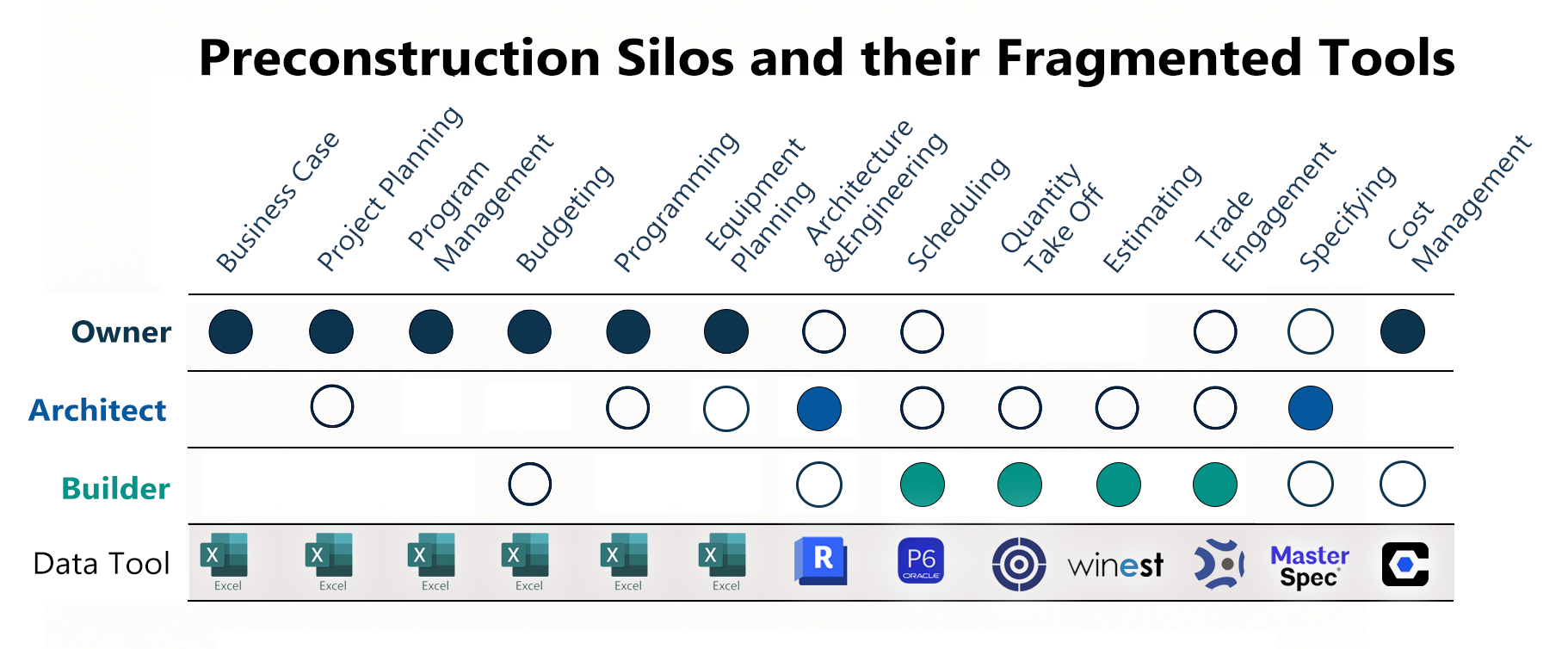
Until design even begins, virtually all upstream planning, programming, budgeting, and high-impact decision-making still relies on disconnected Excel spreadsheets, Word documents, email threads, and text messages.
Myriads of new tools and technologies have emerged, yet nearly all remain isolated islands—requiring manual data entry, re-entry, and error-prone transfers between systems. These claims as to why more tools only increase overhead deserves significantly more applied data research.
Why does this fragmentation persist despite decades of promises?
That brings us to the core, underlying reason the entire process remains siloed, manual, and riddled with waste.
Rewiring the Contract Framework
The root cause of runaway overhead, persistent waste, and the absence of measurable productivity improvement is the dominant cost plus and billable hour compensation structure. This series of articles emphasizes this point, because under these contracting frameworks nearly every participant is financially motivated by higher budgets, greater cost, more hours, and increased complexity. When the cost of construction grows, profit grows with it.
McKinsey identified this misalignment as a primary driver of the industry cost and productivity crisis. Nine years later, the problem has not improved. It has grown worse
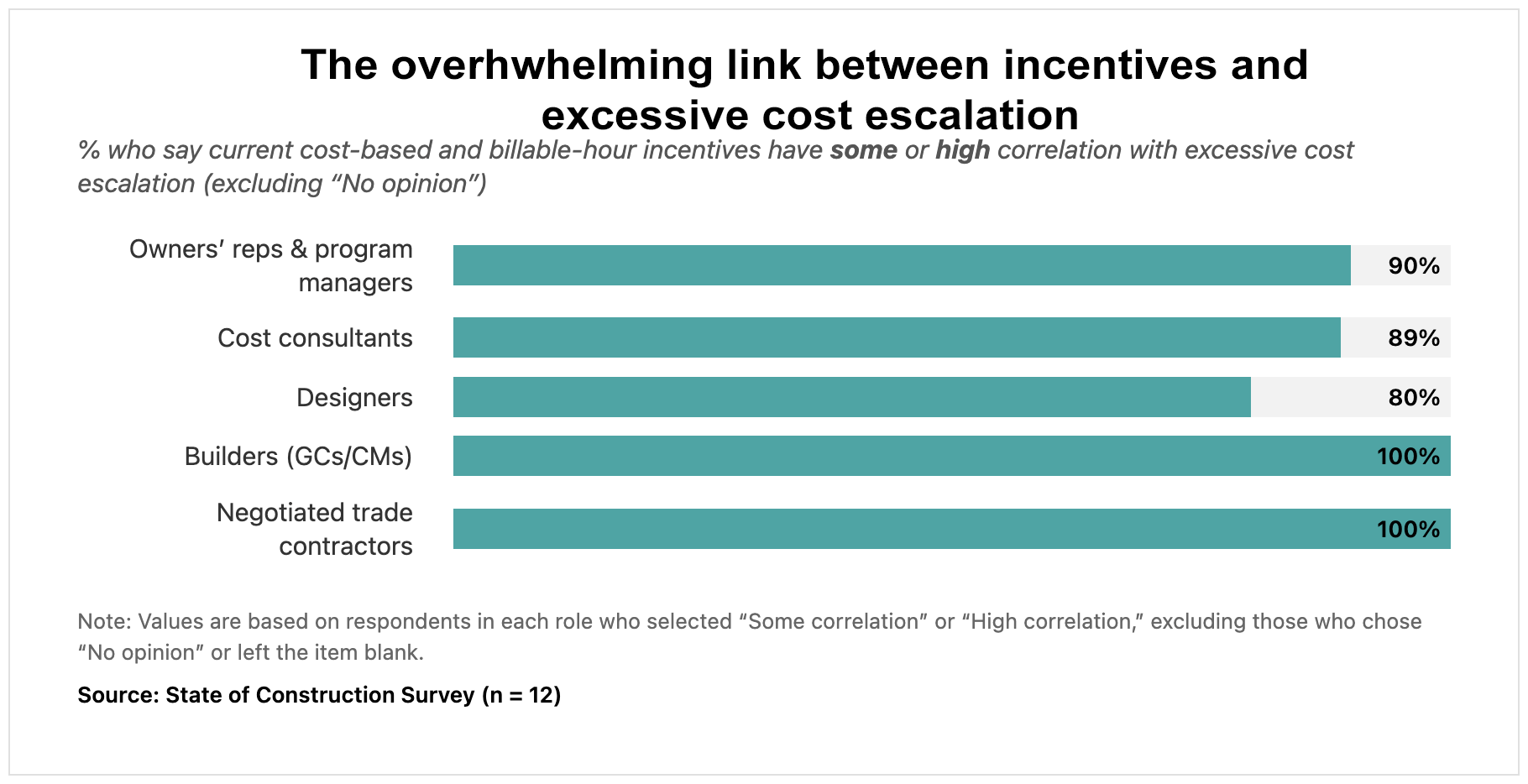
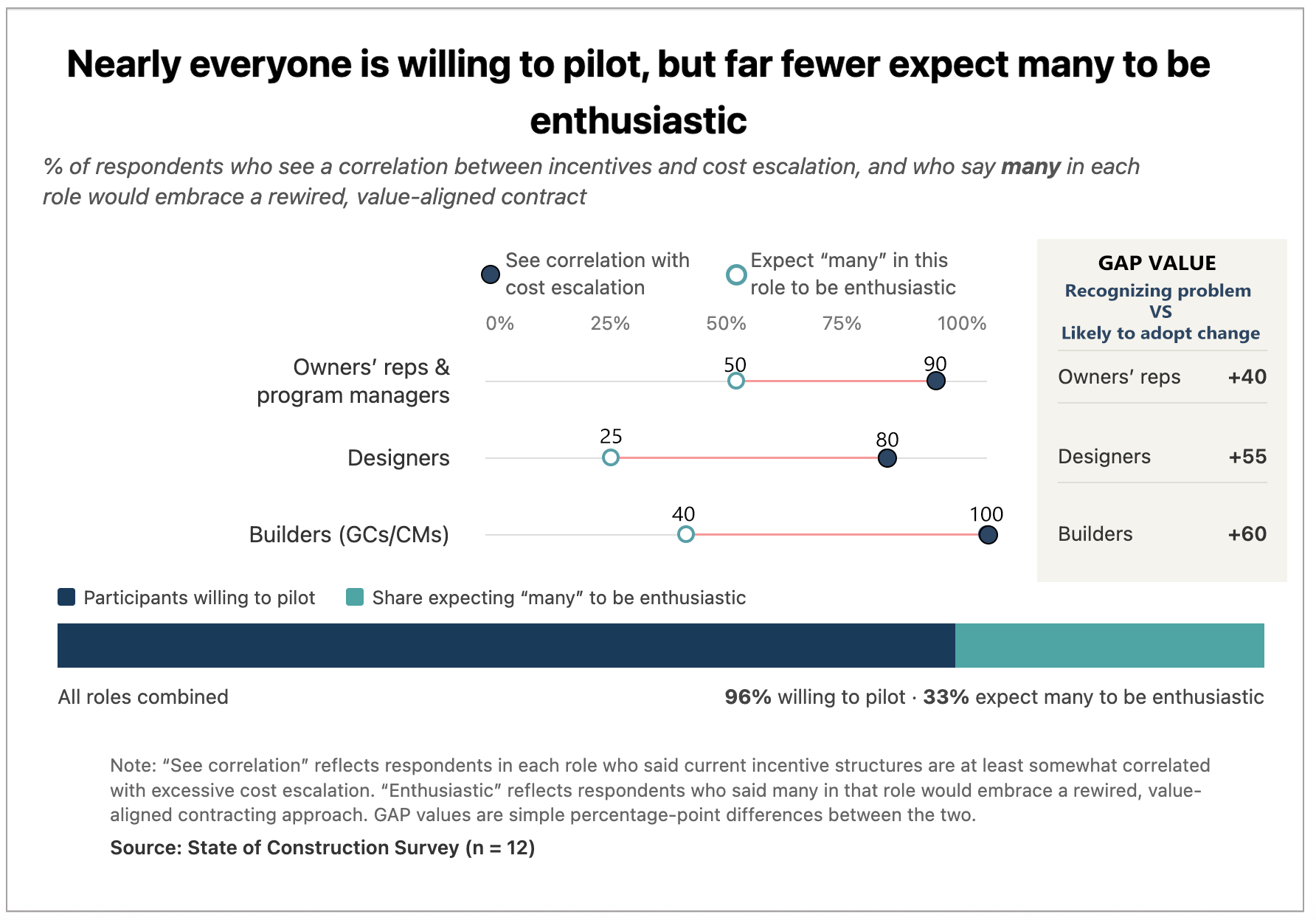
Survey respondents overwhelmingly recognized the link between current incentive structures and excessive cost escalation, as seen in the figure below.
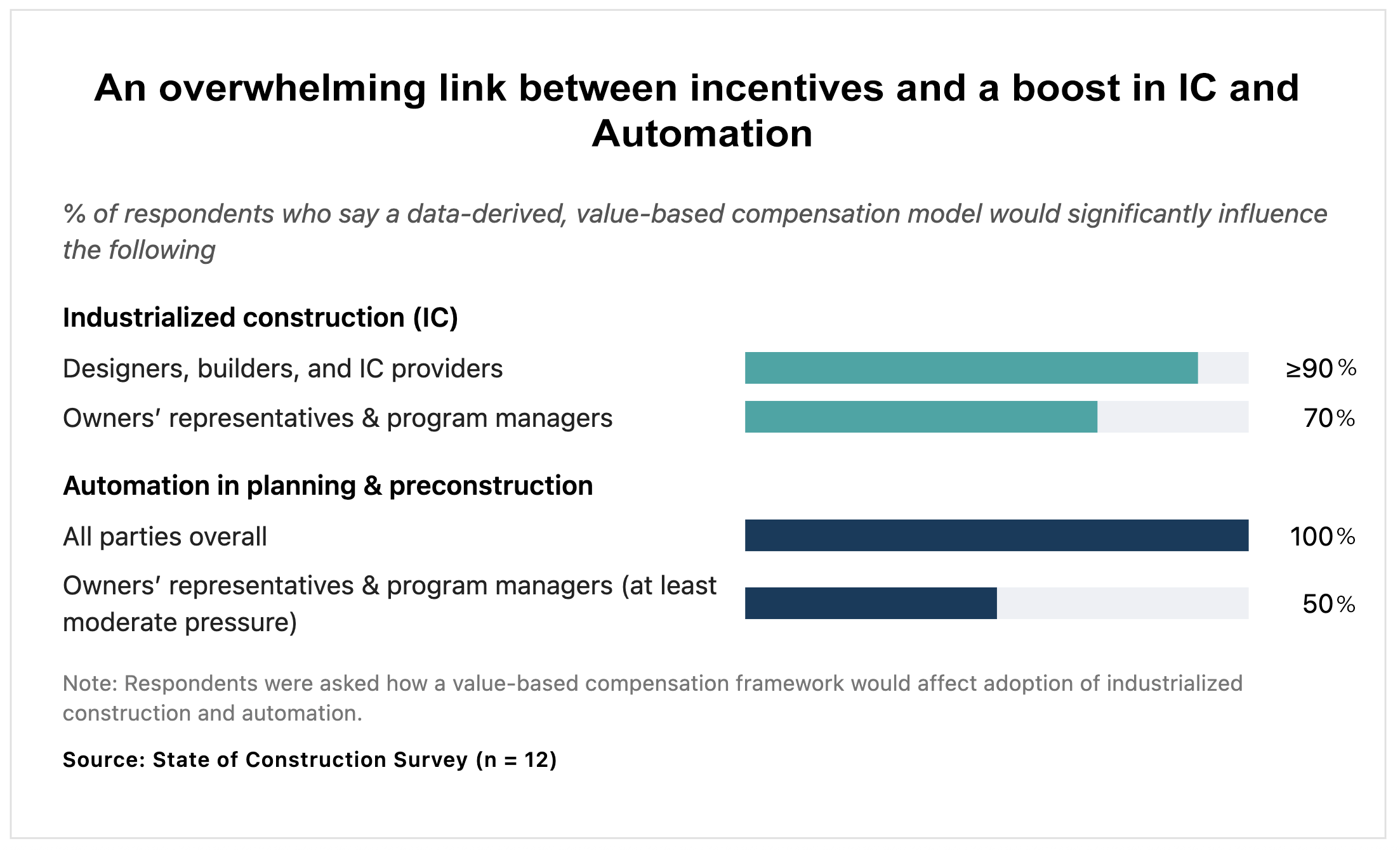
Respondents were then presented with a value based compensation model in which a data derived market value establishes a baseline, and compensation is tied to measurable improvement rather than cost or hours. Reactions were positive, as shown in figure 8:
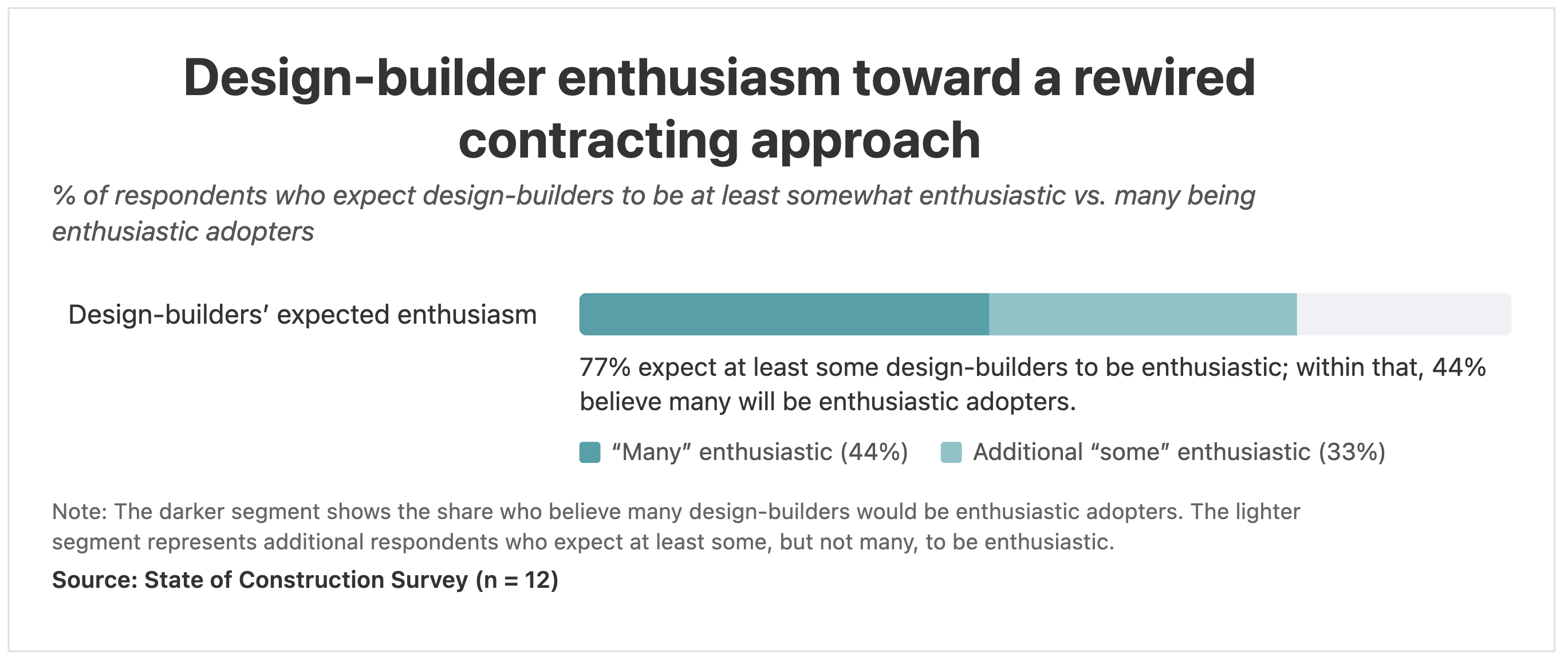
Participants were also asked who would be willing to pilot or adopt such a realigned approach. Figure 9 shows that a strong majority believe that design builders in particular would be at least somewhat enthusiastic, and many would be very enthusiastic.
Finally, respondents were asked about a comprehensive solution that reduces required effort while increasing return on effort through automation and aligned incentives. Figure 10 presents the results.
It should be noted that Lean IPD and TVD does provide “shared savings” provisions, which may help projects come in under budget and ahead of schedule. But, as the data implies, increases the project budget and final cost. Again, further applied data research is needed to determine if and to what measure, projects benefit from or pay a higher price, for IC and other lean practices.
Conclusions
Several thousand industry professionals were invited to participate in the survey through LinkedIn groups and email. Only twelve responded. The low response rate could be interpreted as evidence that few are interested in the kind of fundamental change McKinsey called for. It may also suggest that many strongly resist the national cost data that now confirms the severity of the crisis.
Yet the responses themselves tell a more encouraging story. Among those who are engaged, there is a strong belief that the problem is real, solvable, and worth solving. The sense of urgency that motivated McKinsey’s original research deserves to be renewed.
Construction remains an industry in need of improvement, reform, and reinvention. The Lean Construction 2.0 series has documented both the problem and a practical solution. That solution is grounded in scientific method, applied research, and measurable process improvement. Its intellectual foundation is the same that transformed Toyota, American manufacturing, retail, healthcare, and many other sectors. While lean construction has adopted parts of the Toyota Production System, it has not fully embraced the broader and most important principles of W. Edwards Deming, whose work enabled those earlier transformations.
Before the recent AI boom, the capability to integrate and automate the early stages of real estate development had already begun to emerge. Now, with Artificial Intelligence informed by new data standards, data structures, and unified systems, a far more powerful approach to planning, design, and production is within reach.
What is missing is leadership. The industry now waits for owners, designers, and builders with the courage to apply Deming’s principles and guide the transition to a more productive, more predictable, and more cost effective future.
If you would like to learn more or begin the Lean Construction 2.0 journey please visit www.buildingcatalyst.com
Footnote:
1 - The US Inflation Rate data can be accessed here. It provides historical inflation rates with annual figures from 1914 to present. These inflation rates are calculated using the Consumer Price Index, which is published monthly by the Bureau of Labor Statistics (BLS) of the U.S. Department of Labor.
Also shown in figure 1, is the combined building materials escalation and construction industry wage rate growth. The produce price index data is provided here on the Statista website. Wage rate growth data is provided here on the Federal Reserve Bank website.
Construction Analytics forms the basis of the Owner's Building Cost data and can be accessed here.