

McKinsey Global Institute’s 2017 report, Reinventing Construction: The Route to Higher Productivity, accused our industry of being trapped in a circa-1945 time warp—and national data shows that this condition has only worsened since. For decades, construction has remained stuck in a cycle of inefficiency: fragmented spreadsheets, subjective judgments, and misaligned incentives. Despite billions invested in software and “point solutions,” the industry still lacks a unified system that connects planning, design, and construction into a coherent whole. As a result, overhead and other non-value-added activities have more than quadrupled in their inflation-adjusted cost.
McKinsey has led the call for “advanced automation” and incentive alignment as essential steps toward solving construction’s cost crisis. Until now, those recommendations have largely remained out of reach—good in theory, unattainable in practice.
Building Catalyst introduces construction’s first Integrated Automation System (IAS), built to finally change that. Built on Lean 2.0 principles and powered by data, knowledge, and automation, IAS introduces a step-by-step framework that transforms how projects are conceived, planned, designed, and delivered. It replaces fragmented, file-based processes with a unified digital platform, creating structure, clarity, and measurable accountability across the project lifecycle.
This article outlines five stages of transformation—from intelligent (data-driven) planning and aligned contracting to full lifecycle optimization—showing how IAS empowers owners, developers, and advocates to lead the shift from today’s wasteful “win-lose” system to tomorrow’s value-driven “win-win” approach.
When waste is removed and incentives are aligned, the beauty of building reemerges: projects that are predictable, efficient, and truly value-driven.
Replace fragmented spreadsheets with a unified digital platform.
McKinsey’s push for “advanced automation” can now begin at a project’s outset. The Building CATALYST IAS provides a single source of truth, dramatically reducing time and cost inefficiencies. Key features include:
Building CATALYST enable these features to be implemented today.
Shift from cost-plus and billable hours to value-based compensation.
IAS aligns the intrinsic and financial motivations of owner's advocates, architects, and builders, making true incentive alignment possible.
As described in A Win-Win Alternative to Planning, Design, and Construction Building CATALYST is able to guide owners and building teams to reversing the compensation framework to eliminate waste, improve owner value, and increase return-on-effort.
Cut overhead and integrate data across the lifecycle.
Once the data standards and processing, and the incentivized contracting framework are established, the IAS enables six downstream transformations eliminating millions of manual and error-prone transactions and setting the stage for continuous, measurable process improvement:
Apply scientific rigor to eliminate waste and variation.
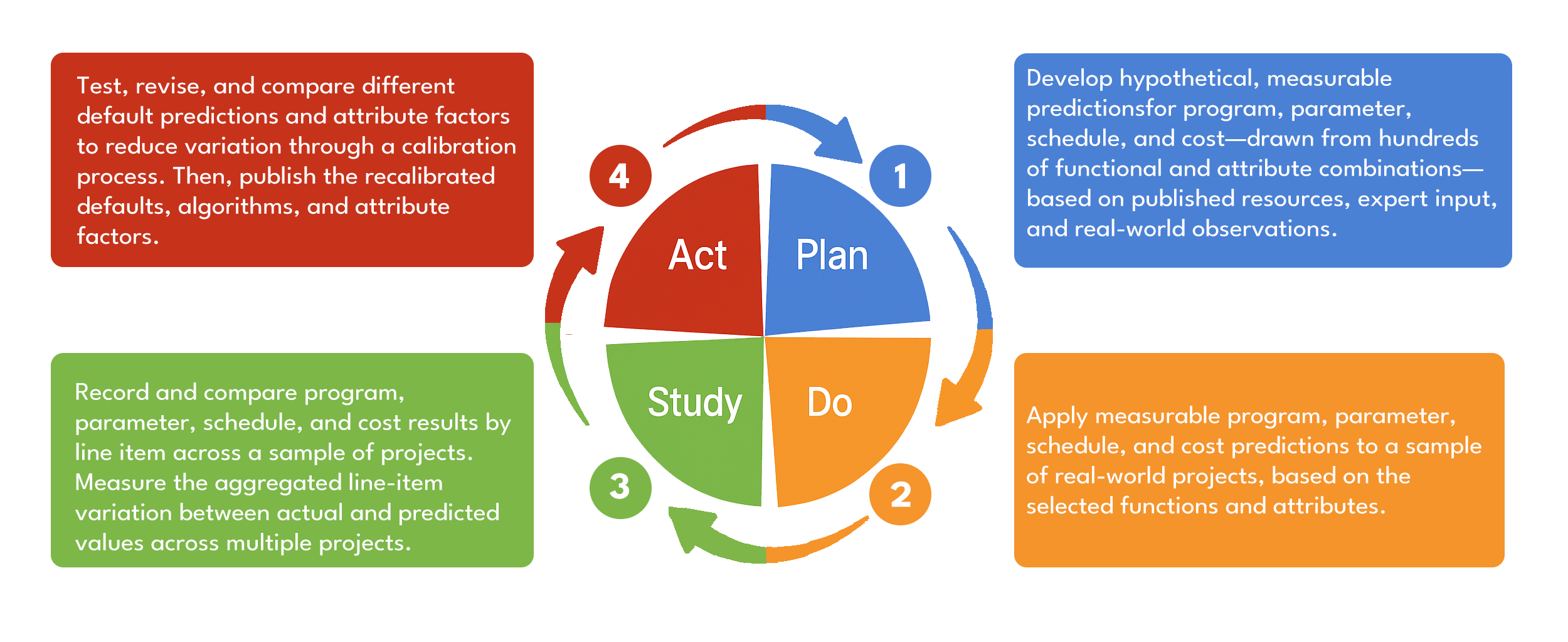
IAS drives continuous process improvement through the same scientific method used to develop Building CATALYST. Figure 2 applies the Deming/Shewhart PDSA cycle to the construction process:
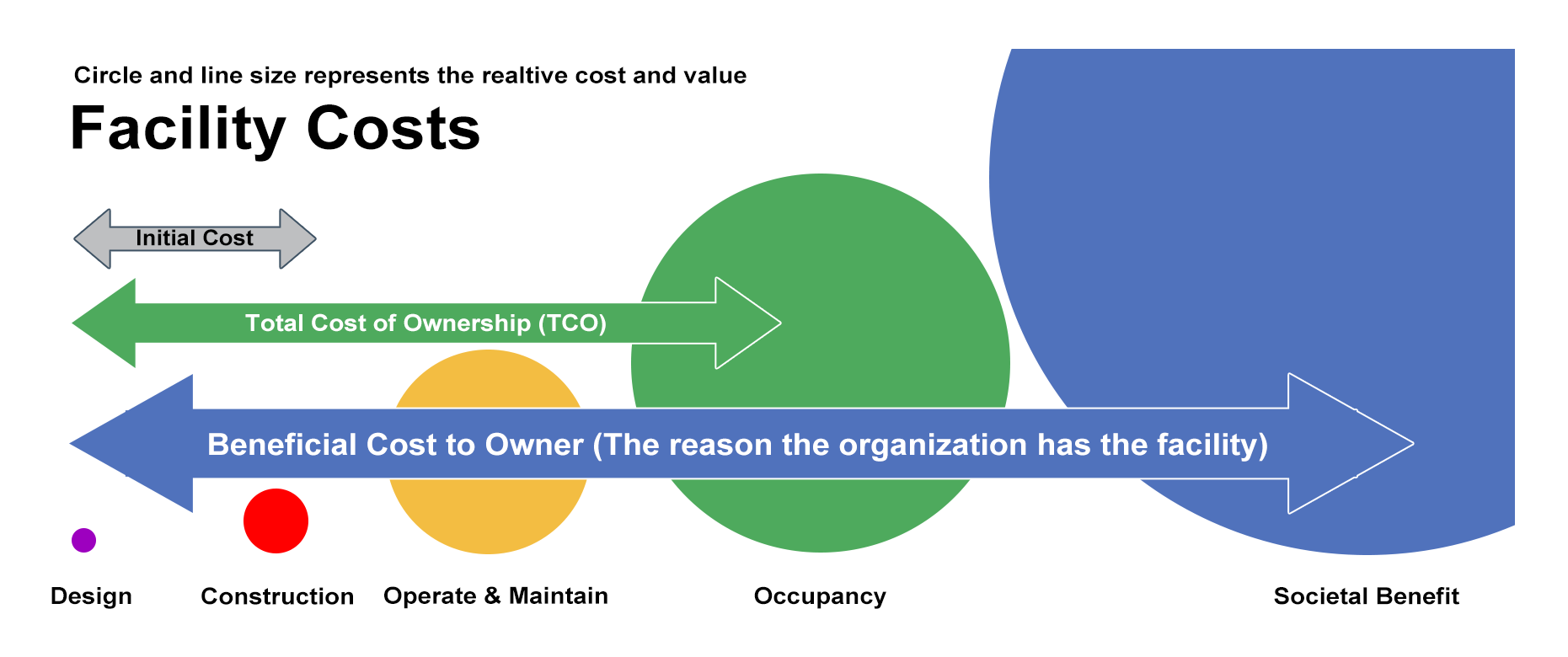
The most profound application of the Intelligent Automation System (IAS) is its potential to optimize ownership, operations, and occupancy life cycle cost. It does so by informing program and design decision-making around the near term facility’s purpose – with its long term potential in full view. As Winston Churchill noted, “We shape our buildings, and then our buildings shape us.” Recent macroeconomic trends highlight the urgency of this approach:
While this one-time waste presents significant opportunities, it is overshadowed by the recurring costs of facility operations, maintenance, occupancy, and societal impact, as illustrated in Figure 3. IAS, when fully realized, will prioritize these factors to deliver sustainable, value-driven building solutions.
Transforming construction is a monumental task—like boiling the ocean or eating an elephant. But it can be achieved step by step. With IAS, the first two stages are ready now: intelligent (data-driven) planning and aligned contract incentives .
IAS isn’t just a tool—it’s a roadmap for reshaping construction into a win-win system of value-driven outcomes.
As highlighted in the short video Win-Win, you don’t need to wait for change—you can lead it. Visit www.buildingcatalyst.com is interested in taking to take the first step.