

The McKinsey Global Institute’s 2017 report—Reinventing Construction: The Route to Higher Productivity—rightly identified several persistent problems in the industry and offered well-considered solutions. However, the report missed the biggest problem of all.
“The lack of knowledge—that is the problem!” —W. Edwards Deming, the quality and process improvement pioneer credited with transforming post-WWII Japanese industry
Deming’s work laid the foundation for the Toyota Production System and modern lean manufacturing. And yet, despite the spread of lean principles in construction, the industry today is more fragmented than ever—between organizations, within organizations, and across every phase of planning, design, and delivery.
The root cause? The absence of shared knowledge resources, standardized data structures, and systemic alignment.
As described in our prior six articles¹:
This inefficiency is directly tied to the dominant compensation structures: cost-plus (percent of cost) and billable-hour. As long as these structures persist, the waste will only grow.
Deming never faced a challenge quite as complex as the building industry. Still, every aspect of his System of Profound Knowledge applies—perhaps even more so here than in manufacturing or retail.
Among the most transformative benefits resulting from Deming’s system will be the move from cost-plus to value-driven, win-win compensation. Waste can be removed starting on day one, during early planning, and innovation can be unleashed through measurable process and value improvement. But only when the system supports it.
And right now, it doesn’t.
That’s why this series now turns to Deming’s framework—his System of Profound Knowledge, which includes:
Here’s how each part applies to the reinvention of construction.
Deming taught, “A bad system beats a good person every time.” He defined a system as “a network of interdependent components working together to accomplish the aim of the system.”
In construction, that system must be built around shared standards, integrated data structures, and aligned goals—beginning in the earliest planning stages. Only then can the team work together, with confidence, toward a shared destination.
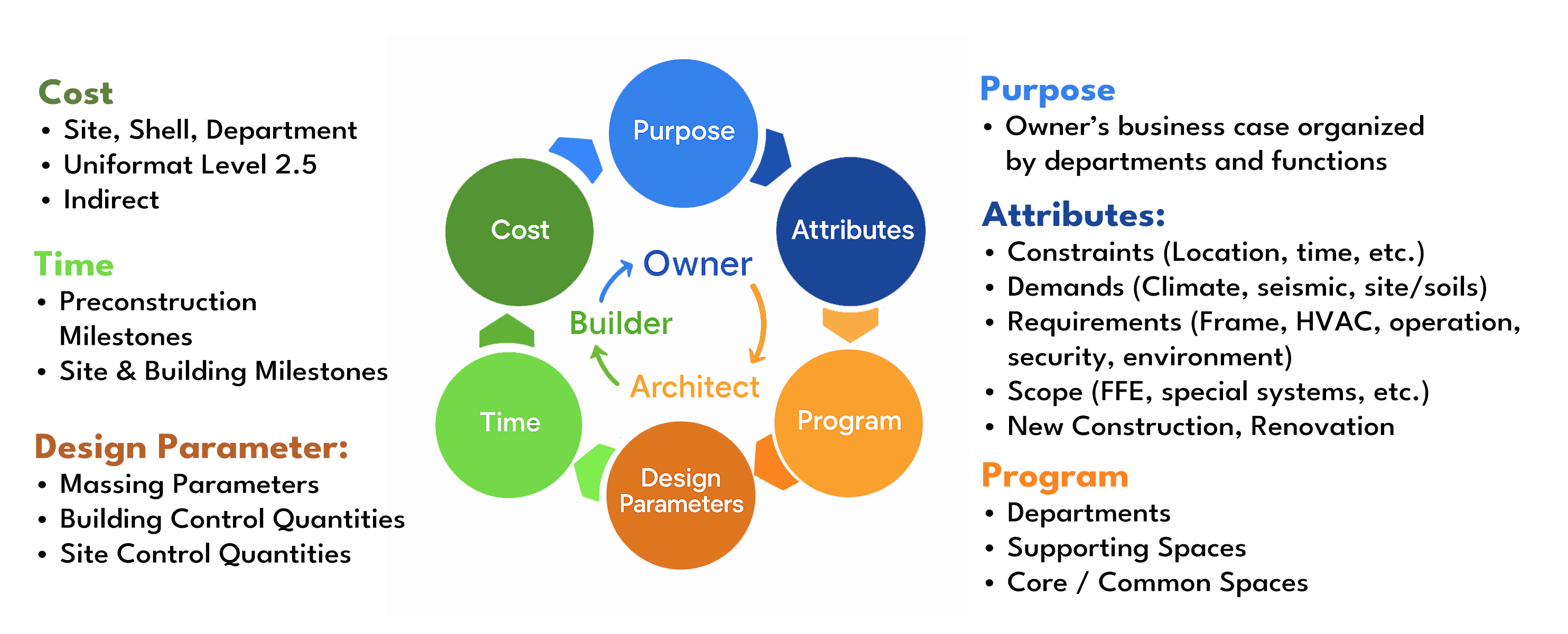
From owner, to rep, to architect, to builder—leadership must drive adoption of this system, across partners and within their own organizations.
They must seek the success of the system, not just their own reward. Why? Because self-interest destroys system balance. Business relationships must now move toward true win-win collaboration.
Complex, custom-designed buildings have never had access to an effective, objective knowledge system. But when critical components are connected through cause-and-effect relationships, objective knowledge—the ability to make accurate predictions—becomes possible.
Deming and Shewhart pioneered this through the PDSA (Plan-Do-Study-Act) Cycle.
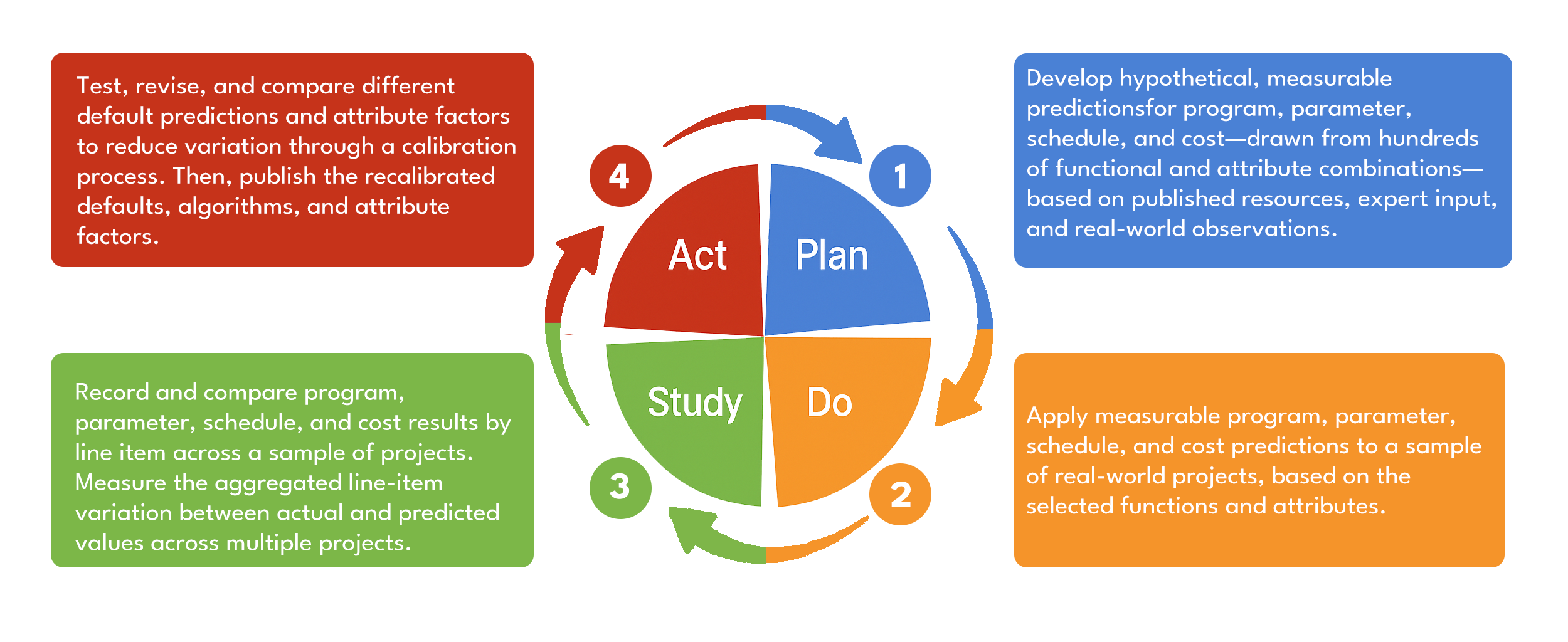
In construction, the more complex the project, the more vital this cycle becomes for learning, innovation, and accurate forecasting.
Without it, project teams remain trapped in a reactionary, one-off cycle—making decisions without a system, repeating the same mistakes, and lacking the insight to improve.
You can’t improve what you can’t measure. Objective measurement—against impartial standards—is key to flipping from cost-based to value-based compensation.
Deming said, “If I could reduce my message to management to just a few words, I'd say it all has to do with reducing variation.”
He taught that production isn’t improved by measuring production, but by understanding and reducing variation.
In construction, PDSA learning only works when you measure actual vs. predicted outcomes—tracking variation. This is where meaningful improvement starts.
Yet, current compensation structures do the opposite:
Without a knowledge system, high variation becomes the norm. And waste, risk, and mistrust flourish.
The crisis in construction is so entrenched that a complete, but simple, shift in thinking is required. Deming faced this in postwar manufacturing—and responded with a new philosophy of management grounded in systems thinking.
As Dr. Barbara Berry explains in her essay, There is a Relationship Between Systems Thinking and W. Edwards Deming’s Theory of Profound Knowledge,:
“Profound knowledge generally comes from outside the system and is only useful if it is invited and received with eagerness to learn and improve.”
Organizations cannot understand themselves fully from within. Objectivity requires outside perspective. But that’s impossible under today’s secrecy and non-disclosure culture.
Leaders must rethink the NDA mindset. Without shared information, we cannot achieve the impartial analysis needed for measurable improvement. Those clinging to proprietary data will be left behind—as customers and competitors embrace transparency, measurement, and knowledge-based performance.
The vision of applying Deming’s System of Profound Knowledge to construction led to the development of Building Catalyst—a SaaS platform that transforms fragmented silos into an integrated knowledge system.
For the first time, building programs, scope, schedule, and cost can be reliably modeled (predicted), and then steered to more cost effective outcomes - starting in the early planning stages. Applied to hundreds of real-world projects, Catalyst has proven that Deming’s system of profound knowledge will transform construction as effectively as it has done so in manufacturing and other sectors.
This short video captures the vision in action.
If you’re interested in helping reinvent construction, visit www.buildingcatalyst.com . In just days or weeks, you can begin experiencing the power of knowledge to reduce waste and uncertainty—starting with your next project.
Previous articles in this series: