

In this series1, we’ve been exposing the massive waste that continues to grow across planning, design, and construction — and pointing to an equally massive opportunity for transformation. That opportunity is rooted in the same scientific and philosophical foundation that transformed manufacturing in post-WWII Japan. So far, we’ve shown that owners today are paying twice what they should for buildings. Why? Because they’re paying over four times the overhead. What used to be value-added work — materials, equipment, and direct labor — has been almost completely flipped on its head.
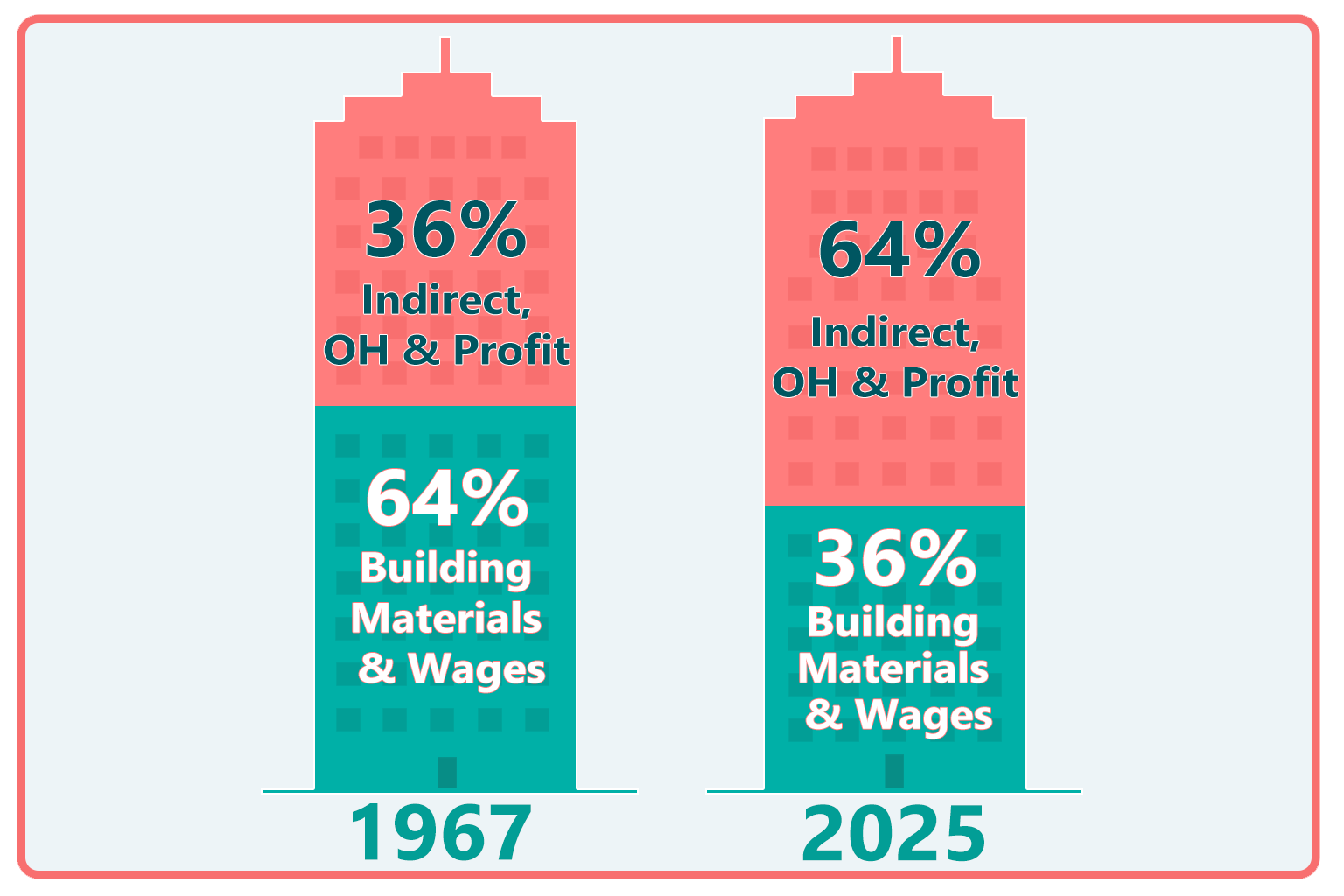
In 1967, 64% of cost went to actual construction work. Today, that number is just 36%, with the other 64% now consumed by overhead, indirects, waste and associated profit. The waste is no longer hidden — it's systemic.
In 2017, McKinsey Global Institute summarized the problem in its report, Reinventing Construction: The Route to Higher Productivity:
“Even while other sectors from retail to manufacturing have transformed their efficiency, boosted their productivity, and embraced the digital age, construction appears to be stuck in a time warp. In the United States since 1945, productivity in manufacturing, retail, and agriculture has grown by as much as 1,500 percent; productivity in construction has barely increased at all.”
McKinsey identified key issues like fragmentation and misaligned incentives — and while they were directionally right, they missed the root cause: overhead. Everyone continues to chase field labor productivity, but the real opportunity lies upstream — in management. The failure to modernize starts in the earliest phases of planning.
Despite IPD (integrated project delivery) and a plethora of technologies — BIM, VDC, VR, AI — planning and preconstruction remain fragmented, manual, and siloed. Manufacturing thrives on integrated, real-time systems. Construction, by contrast, still runs on spreadsheets, isolated tools, and tribal knowledge.
Each major process — from the business case to estimating — is handled by a different group, using different tools, and speaking a different data language. What should be a continuous, iterative planning and preconstruction process is broken into 13 disconnected silos as shown in Figure 2.
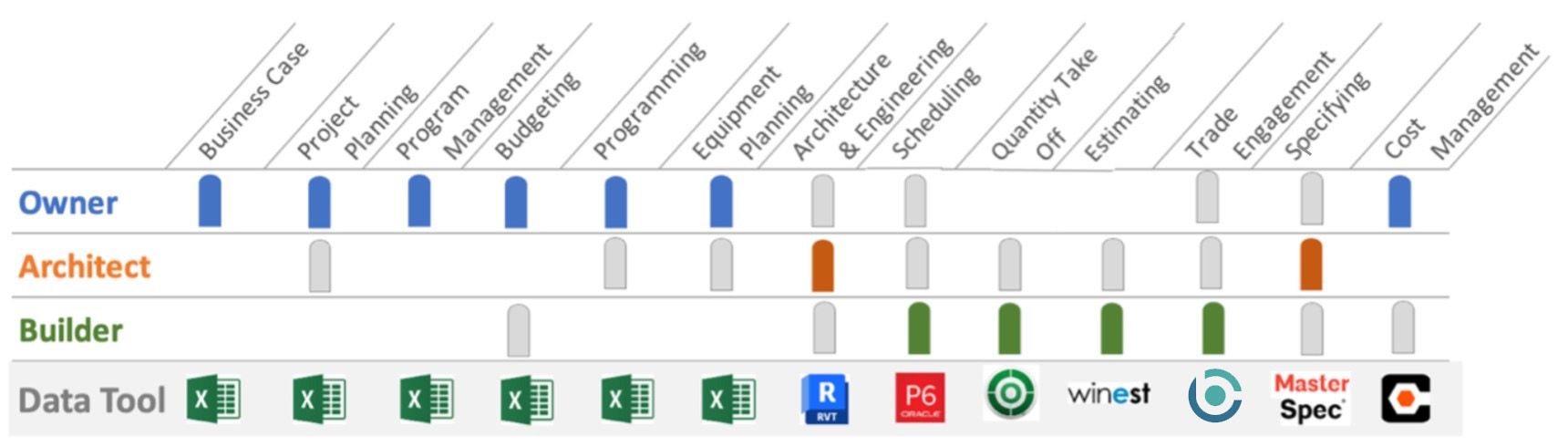
Inter-organizational fragmentation is a major driver of excessive project-assigned overhead. It also fuels fragmentation within organizations, leading to bloated internal overhead. Even within a single builder’s operation, data rarely flows between business development, estimating, procurement, and accounting. New software often makes this worse — adding silo-specific tools that reinforce the very problem they aim to fix.
Meanwhile, the one thing construction desperately needs — reliable data — still doesn’t exist. Builders claim to have a deep historical database, but no known builder has actually collected structured, contextualized cost data tied to the causes behind outcomes. Thousands of line items might give the illusion of precision, but budgets are still being shaped by what the owner can tolerate — rather than by what labor and materials actually cost
Our next post dives into the two-headed monster keeping construction stuck in its time warp:
End Notes: