

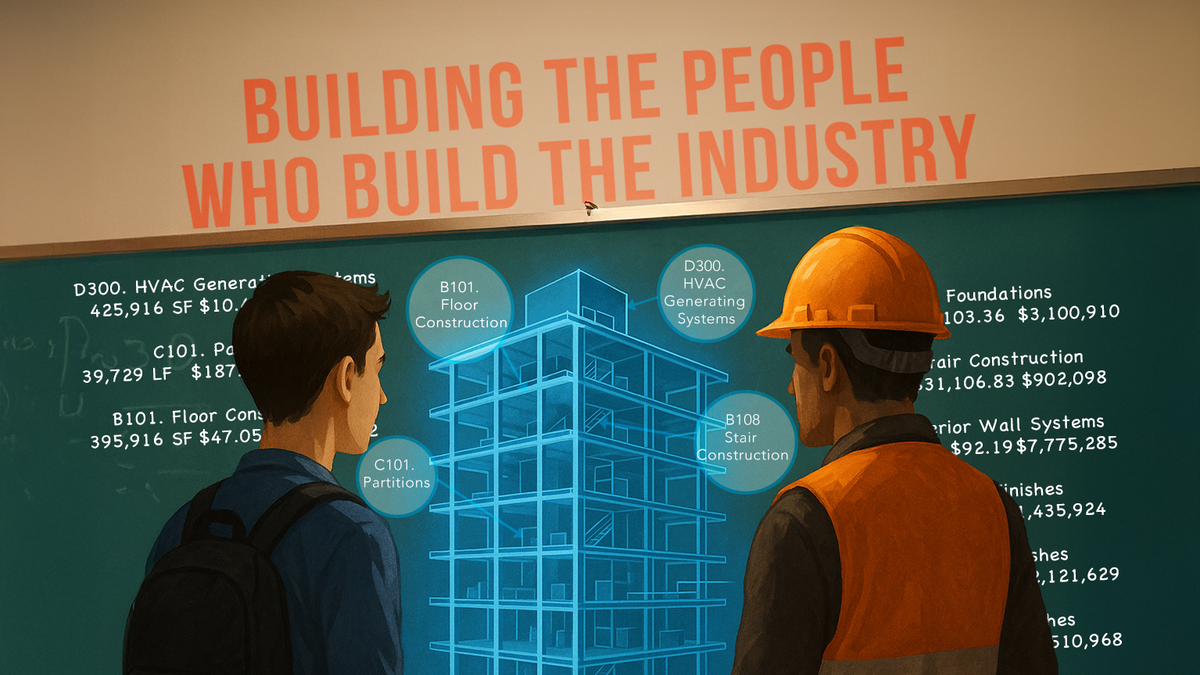
Construction remains trapped in a mid-20th-century time warp, as documented by the McKinsey Global Institute in its landmark 2017 report Reinventing Construction: A Route to Higher Productivity. Regrettably, for lack of knowledge, the problem has only worsened since then.
This article advocates a collaborative partnership between industry and academia to help construction break free from that stagnation. Construction must move beyond fragmented, siloed methods and embrace an integrated systems-thinking approach—the same profound mindset shift that transformed manufacturing in the decades following World War II.
And what better venue to cultivate this new paradigm than construction science programs, where the next generation of planners, designers, and builders is formed?
Our aim is to motivate educators, students, and practitioners to deepen their expertise through rigorous study and real-world application of a data-driven, profound-knowledge system that transforms the real estate development process beginning in the earliest stages of facility planning.
The System of Profound Knowledge applied to Construction
This is the 17th article in the Lean Construction 2.0 series, which outlines a comprehensive curriculum for training professionals in a systems-based approach that answers McKinsey’s call for reinvention. Article 7 in the series adapts Deming’s four-part System of Profound Knowledge (SoPK) to the real estate development process. Anyone called to help lead the essential change must understand and embrace Deming’s system described in this article.

A new generation of rigorously trained planners, designers, and construction managers—educated in Deming’s framework—is indispensable for achieving the multifaceted transformation McKinsey describes.
A Joint Academia / Industry Collaborative
Since the core barrier—as Deming emphasized—is a “lack of knowledge,” construction science programs are the logical place to begin. We propose a four-part initiative for 2026:
Introductory phase: the reinvention vision and hands-on mastery of cost certainty.
Subsequent phases: progress toward mid- and long-term outcomes: sustained, measurable improvements in process efficiency and waste removal.
To explore further, visit www.buildingcatalyst.com.
If inspired, contact us to join the movement to free construction from its 80-year time warp and help shape the next generation of system-thinking professionals.